CIDOC MX23 2023 Ciudád de México UNAM
Paper: “Decolonizing Online Collections Presentations” Dr. Alan Prohm – Berlin
Script
Decolonizing Online Collections Presentations CIDOC MX23
CIDOC 2023 Ciudád de México UNAM
Dr. Alan Prohm – Berlin
Presentation Script:
SLIDE 1 – CIDOC Title
Start
SLIDE 2 – Talk Title
Hello – it’s great to be in Mexico
(Quíero decir al inicio tambien en espanol, lengua comadre para mí, cuanto me alegra poder tomar parte a esta conferencia aquí con ustedes en México, aún si solo desde aquí en Berlin, entonces muchissimas gracias al equipo organisador, al Instituto de Investigaciones Estéticas y ala UNAM para esta ocasión.)
My name is Alan Prohm and the title of my talk today is: « Decolonizing Online Collections Displays: Historical Tasks and Lost(?) Opportunities of the Humboldt Forum »
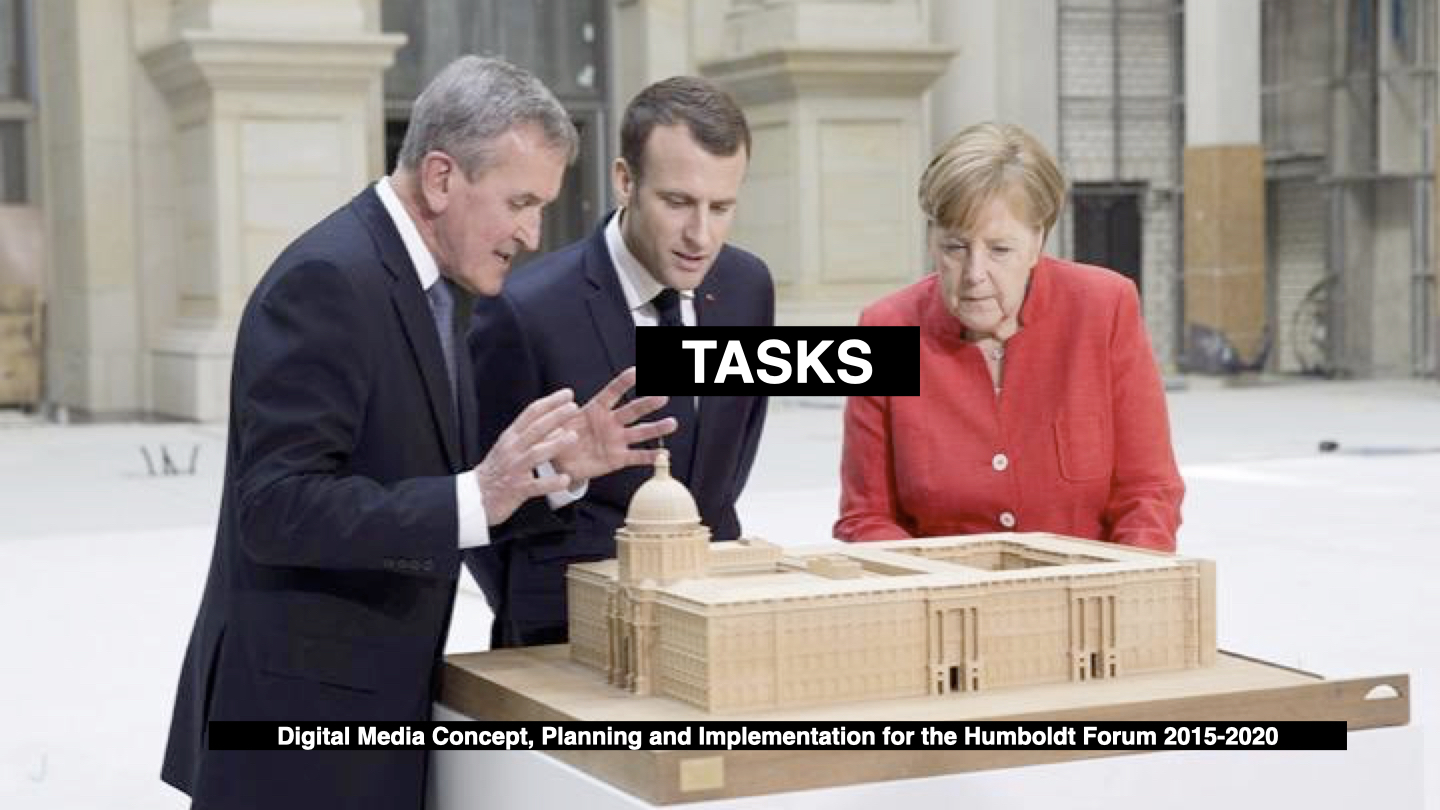
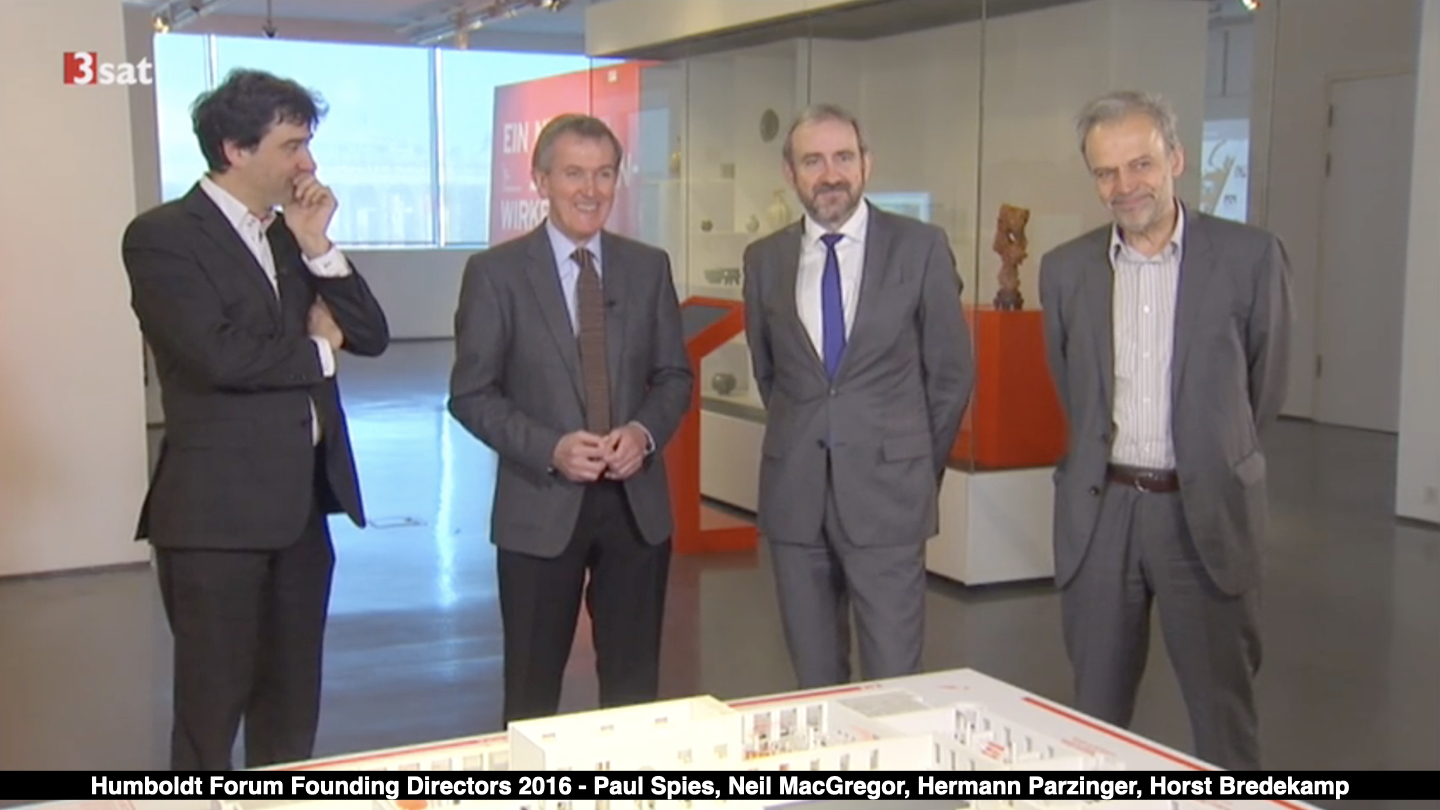
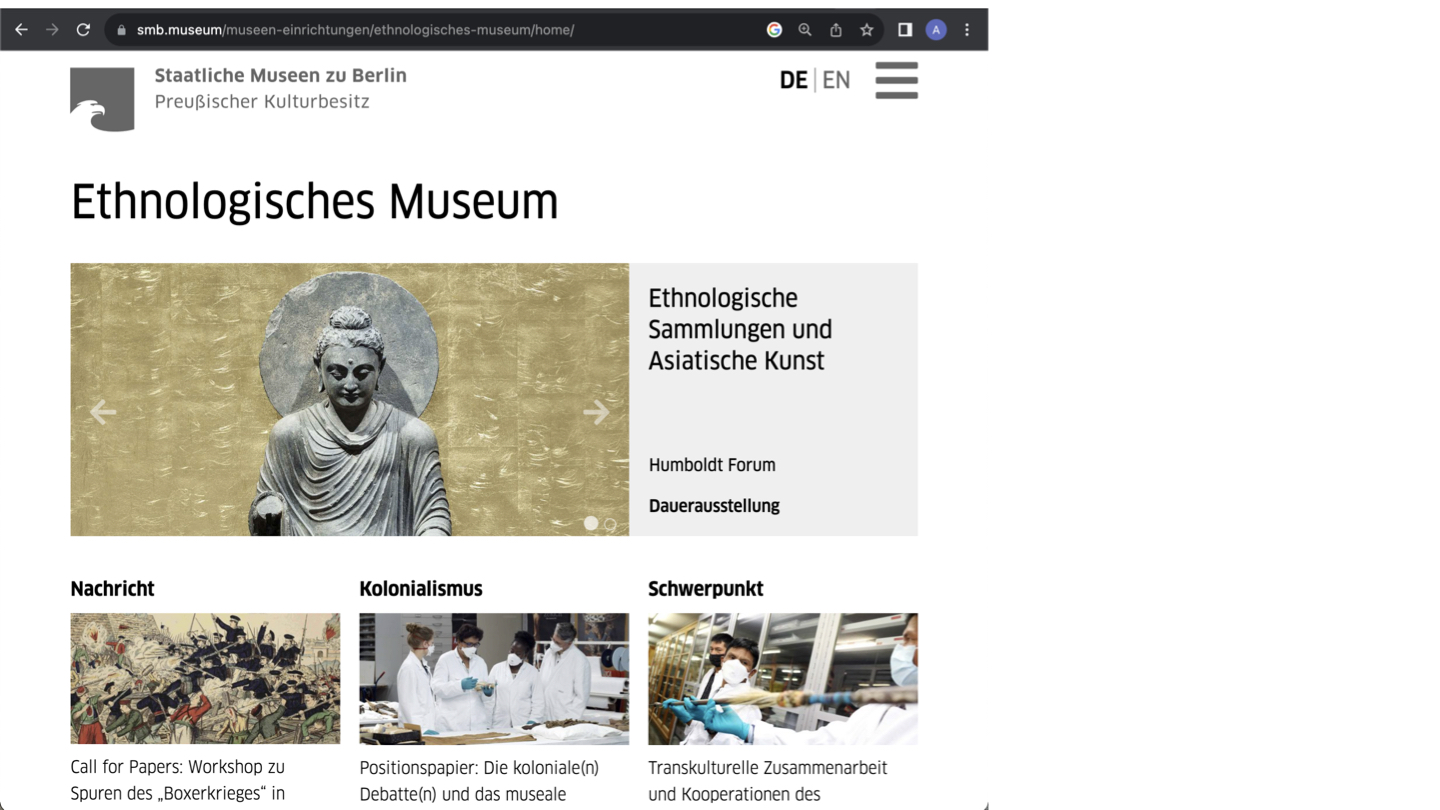
I work as a Concept Designer for digital media at the creative agency TheGreenEyl in Berlin, where we understand ourselves as translators of complex content into transmedial exhibitions, installations and digital applications. I am also periodically affiliated with the Institut für Kulturwissenschaft / Institute for the History and Science of Culture at the Humboldt-Universität zu Berlin, where I have taught seminars on the digital mediation of cultural heritage and am pursuing a research and writing project on these topics under Prof. Dr. Claudia Mareis, Chair of Design and the History of Knowledge. And between 2015 and 2020 I was tasked (with a few others) with conceiving, planning and implementing an overall digital offering for the new Humboldt Forum in Berlin, a which includes the exhibition spaces and collections of the Ethnologisches Museum and Museum für asiatische Kunst of the Staatliche Museen zu Berlin (the National Museums in Berlin).
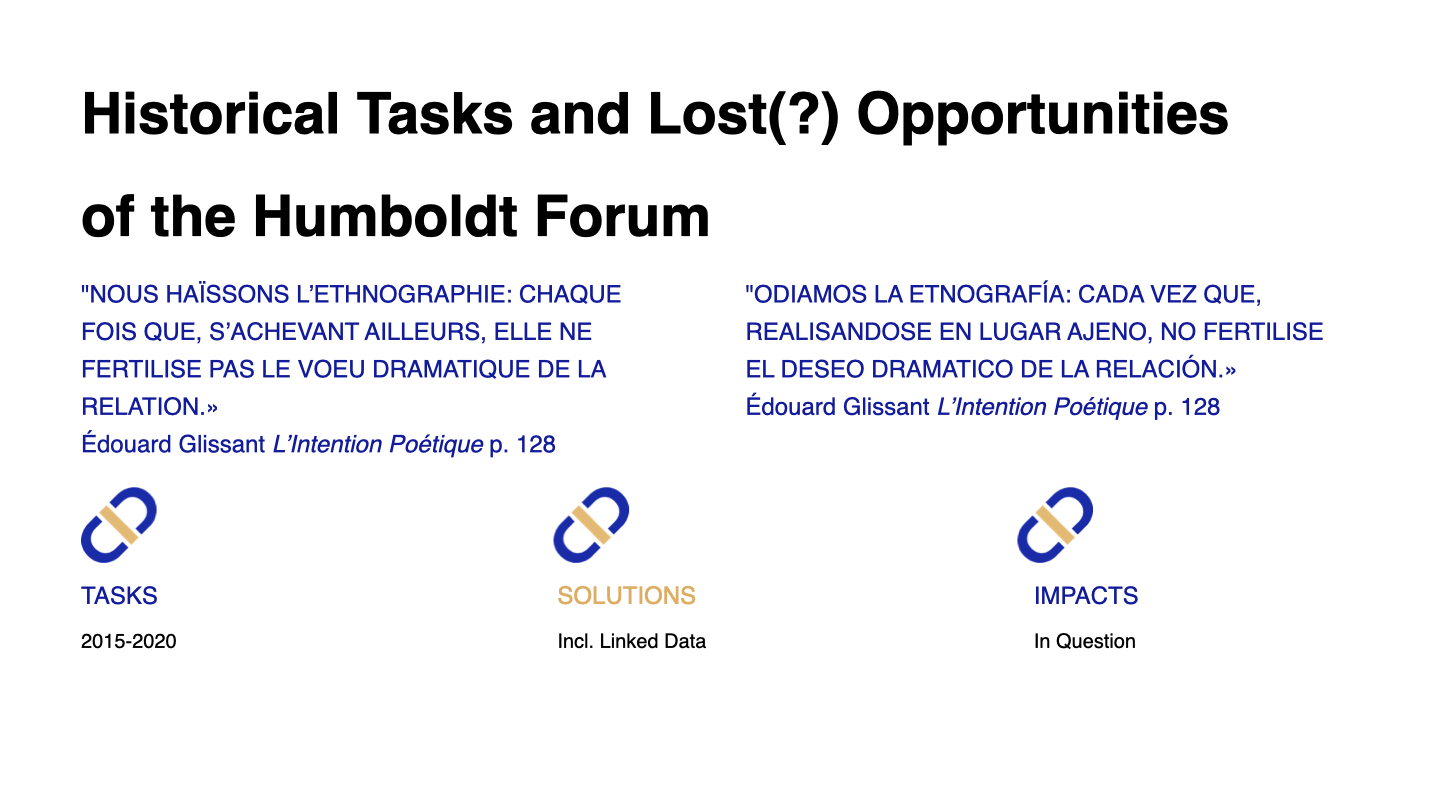
SLIDE 3 – Talk Sub-Title
I am of course not here to tell you how to decolonize digital collections displays, but to share with you experiences of where that task can be encountered today, how it can be confronted, and what difference that can make.
My paper here addresses the Humboldt Forum directly as a concrete case study of media design with special relevance to global histories of knowledge – and with special potentials for producing and learning to produce new, better, perhaps in a measure decolonizing, mediations of this cultural heritage, which (to give a conclusion before the argument) would mean mediations that do more to redistribute the value(s) accruing in the movement of cultural materials and impulses from « the world» into collections at the hegemonial center.
In particular, my short overview will argue the centrality of Linked-Data solutions (coming down to Meta-Data structuring and Link functions) as well as more generally to Linked-Media thinking in the conceptualization and implementation of more relational versus exclusive/identitarian Collections Display solutions. These will also be held to be central in the evaluation of online Digital Collections Displays launched to date.
This will follow the structure of a traditional Case Study: looking at Task, Solution, Result.
And if I have time I will end with a few ideas for how relational data practice can enable other and better (contextualizing, participative, de-colonizing) knowledge platforms and knowledge practices around cultural heritage data.
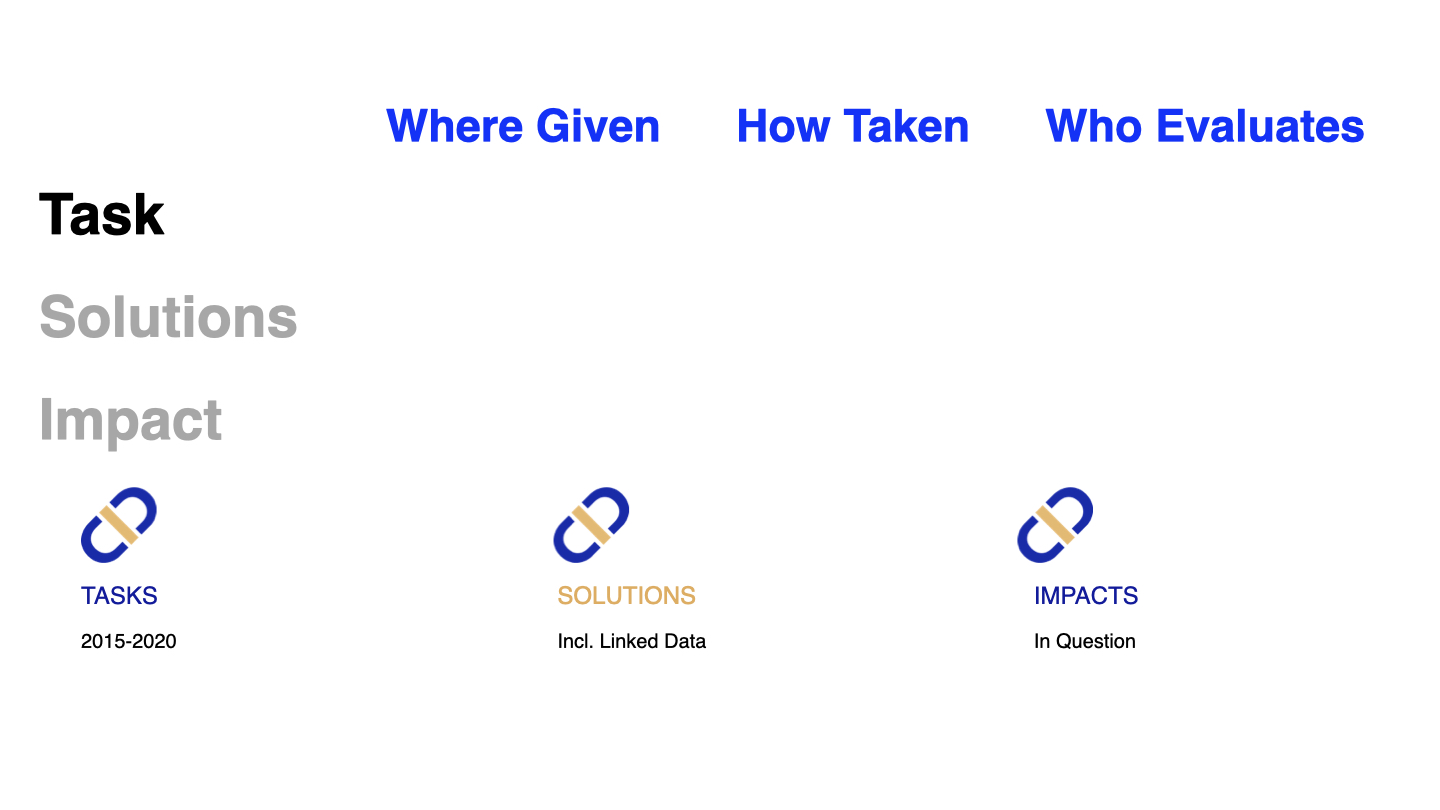
SLIDE 4 – Task
The task of decolonizing online collections displays can be approached under three guiding questions: Where is it given? How is it taken? and Who evaluates?
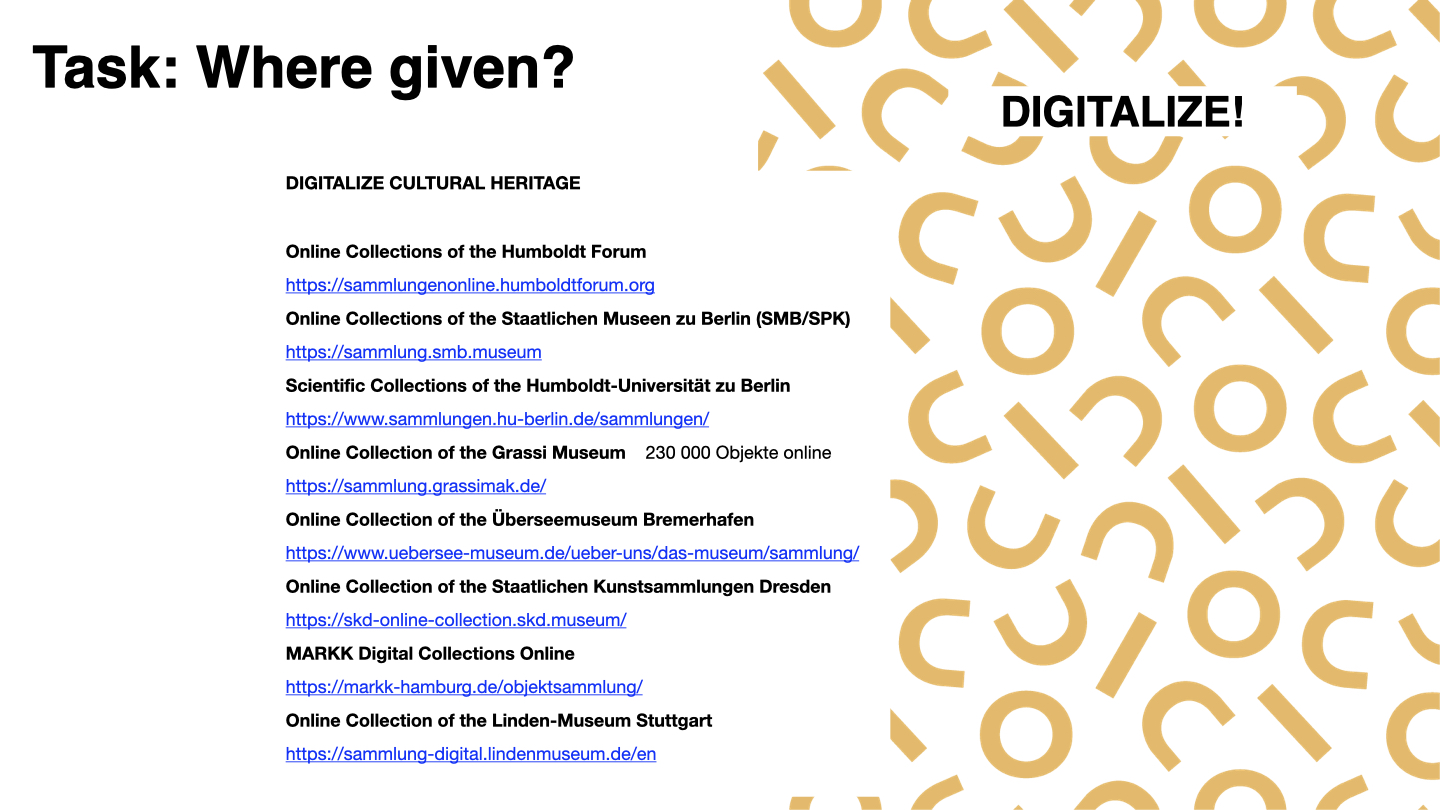
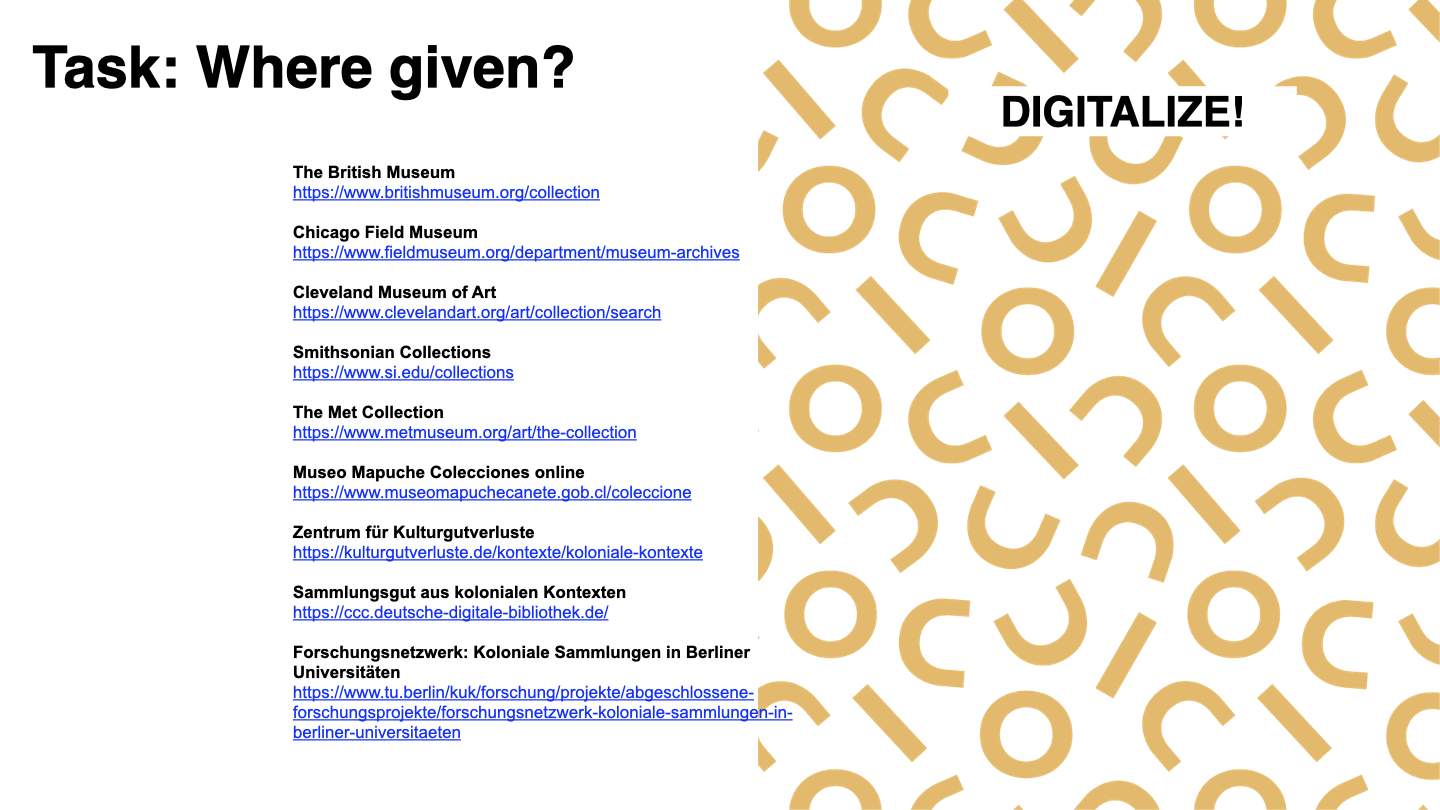
Task: Where given?
SLIDE 5
Within the last ten years, dozens of museums (to speak of germany alone) have digitalized hundreds of thousands of objects each, stemming from collections activities around the world, across historical periods, and inevitably with heavy preponderances in the colonial period under colonial contexts. In every case, visions, strategies, concepts, plans and tasks for the process of digitalization to undergo were (more or less explicitly and more or less effectively) developed and implemented by documentation and digitalization workers and teams, producing useable and measurable results.
SLIDE 6
The cases where decolonizing the collections displays was given explicitly as part of the task are fewer, and this becomes a value for distinguishing among presentations and extending a knowledge frontier in online collections practice.
SLIDE 7
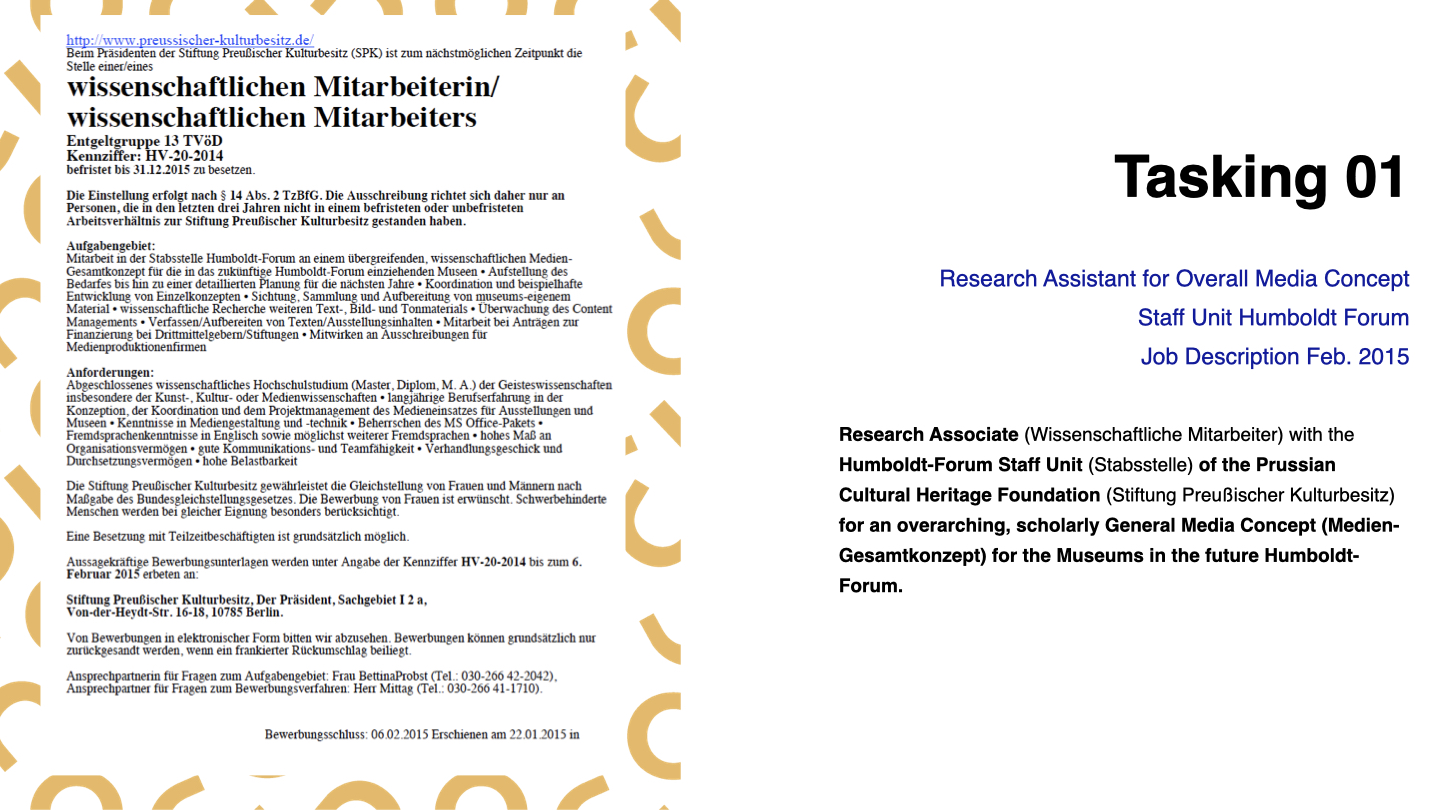
I encountered the task with the publication of a job opening (in Jan. or Feb. of 2015) for « Overarching Media Concept/Mediengesamtkonzept » for the then still just incipient Humboldt Forum. It was published by the Staatliche Museen zu Berlin.
SLIDE 8
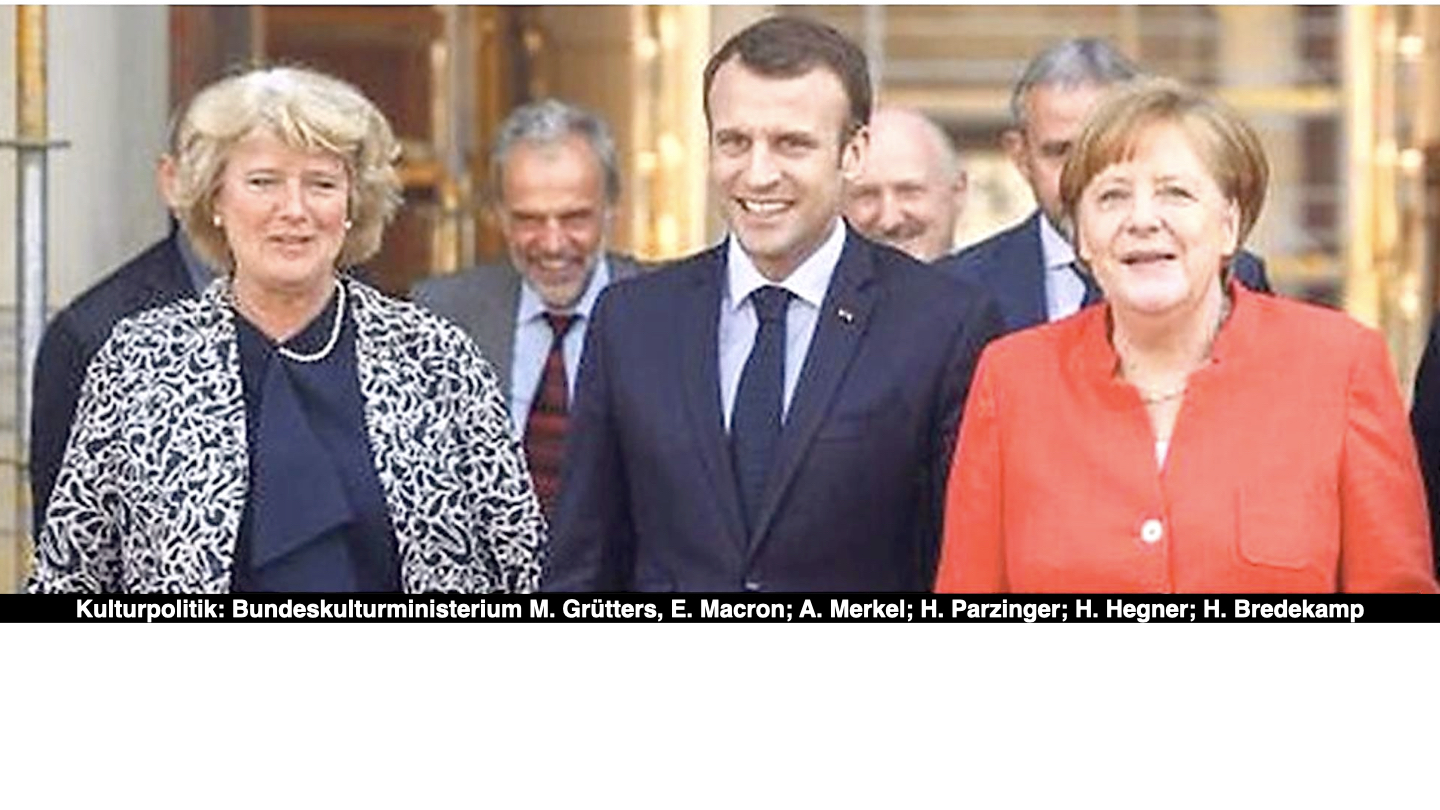
The Humboldt Forum is a project with a particularly complex tasking structure in that it extends between the highest levels of national and European cultural politics, Berlin culture management and the « street level » creative economy culture industry in Berlin.
SLIDE 9
…
SLIDE 10
The contents of the project were similarly complex, as to how they posed and framed the task at hand.
…
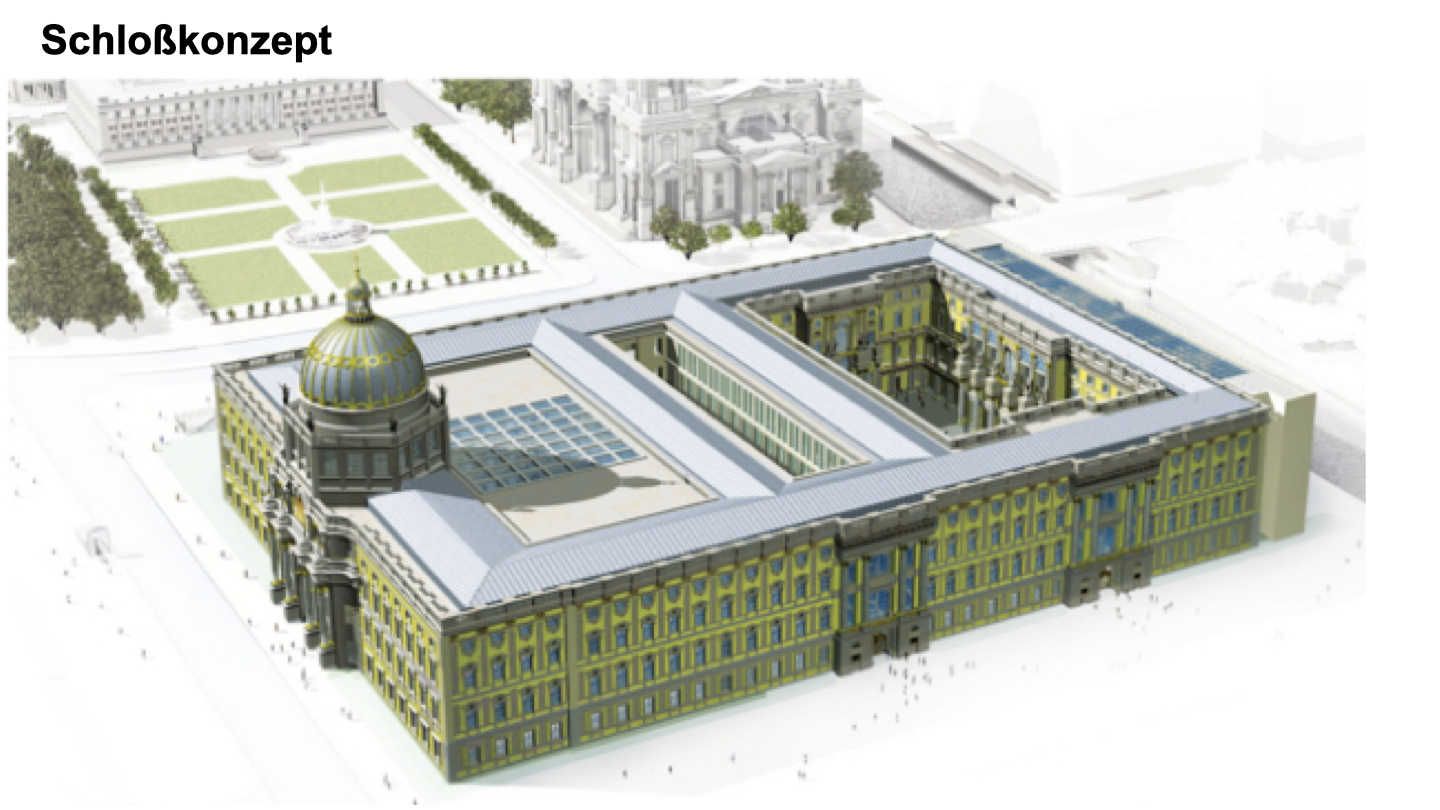
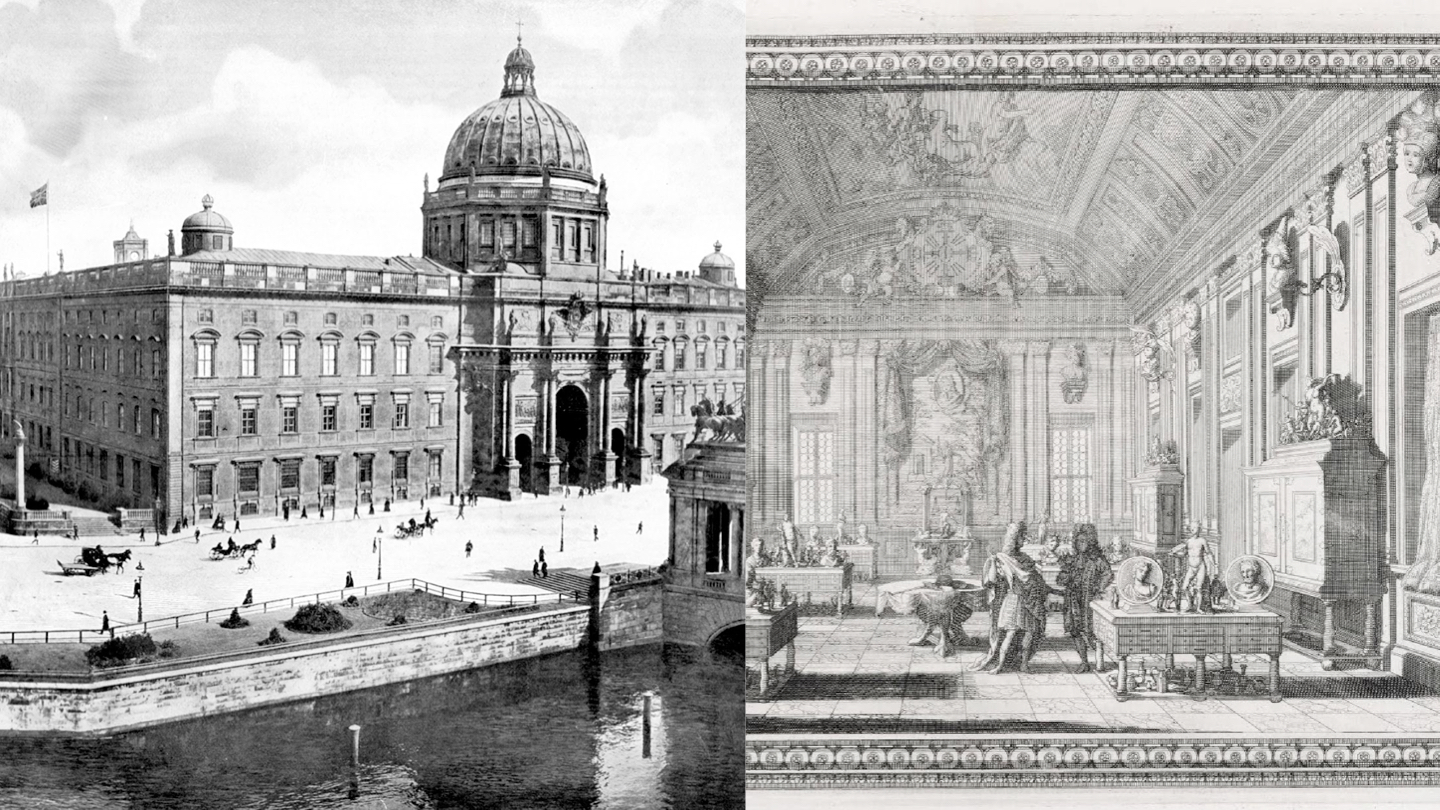
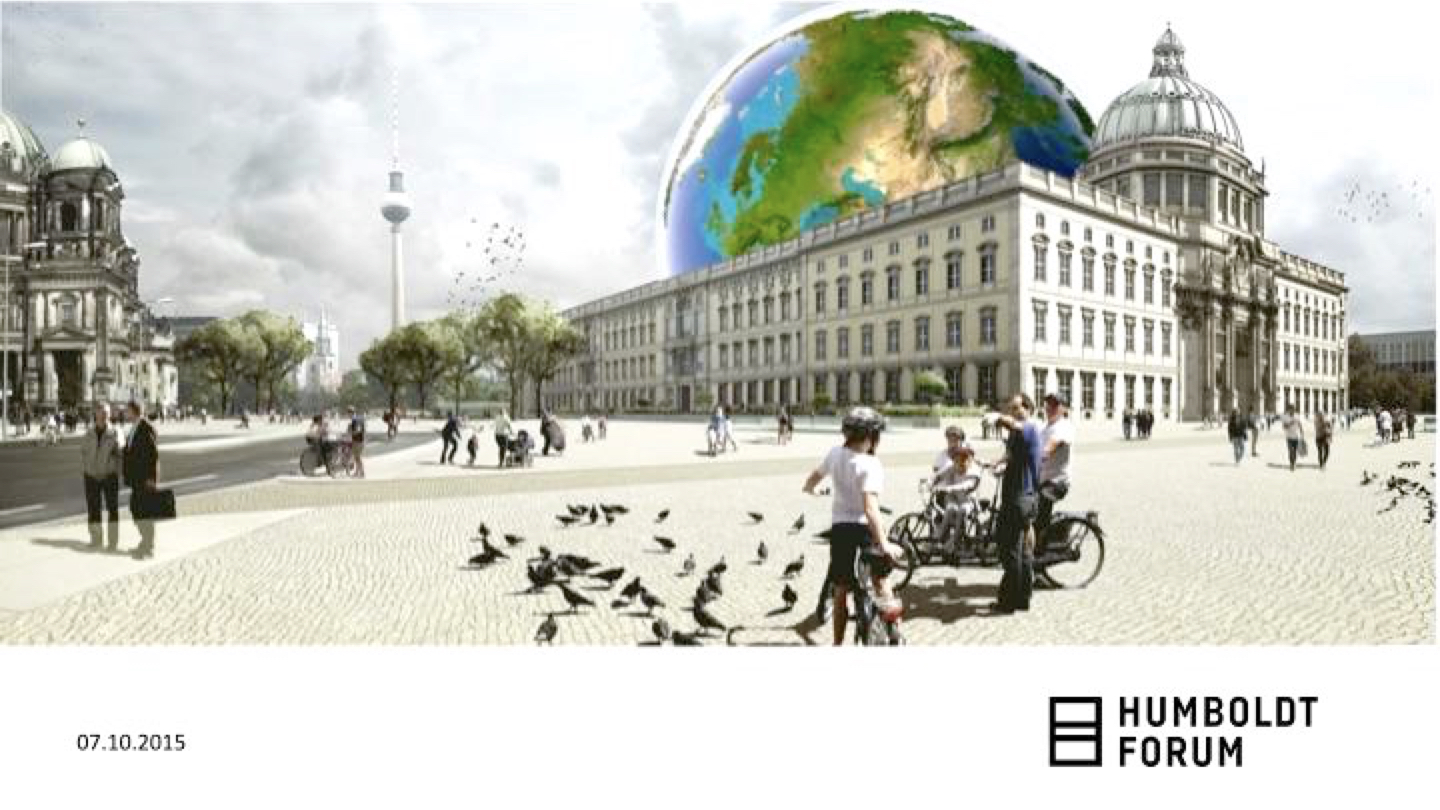
There was the planned reconstruction of the historical Berlin city palace, seat of Germany’s Prussian imperial legacy and original destination of the colonial accumulation at issue in the collections. This inevitability made the project from the beginning a struggle of content with form, in which the digital hoped to play a decisive role.
SLIDE 11
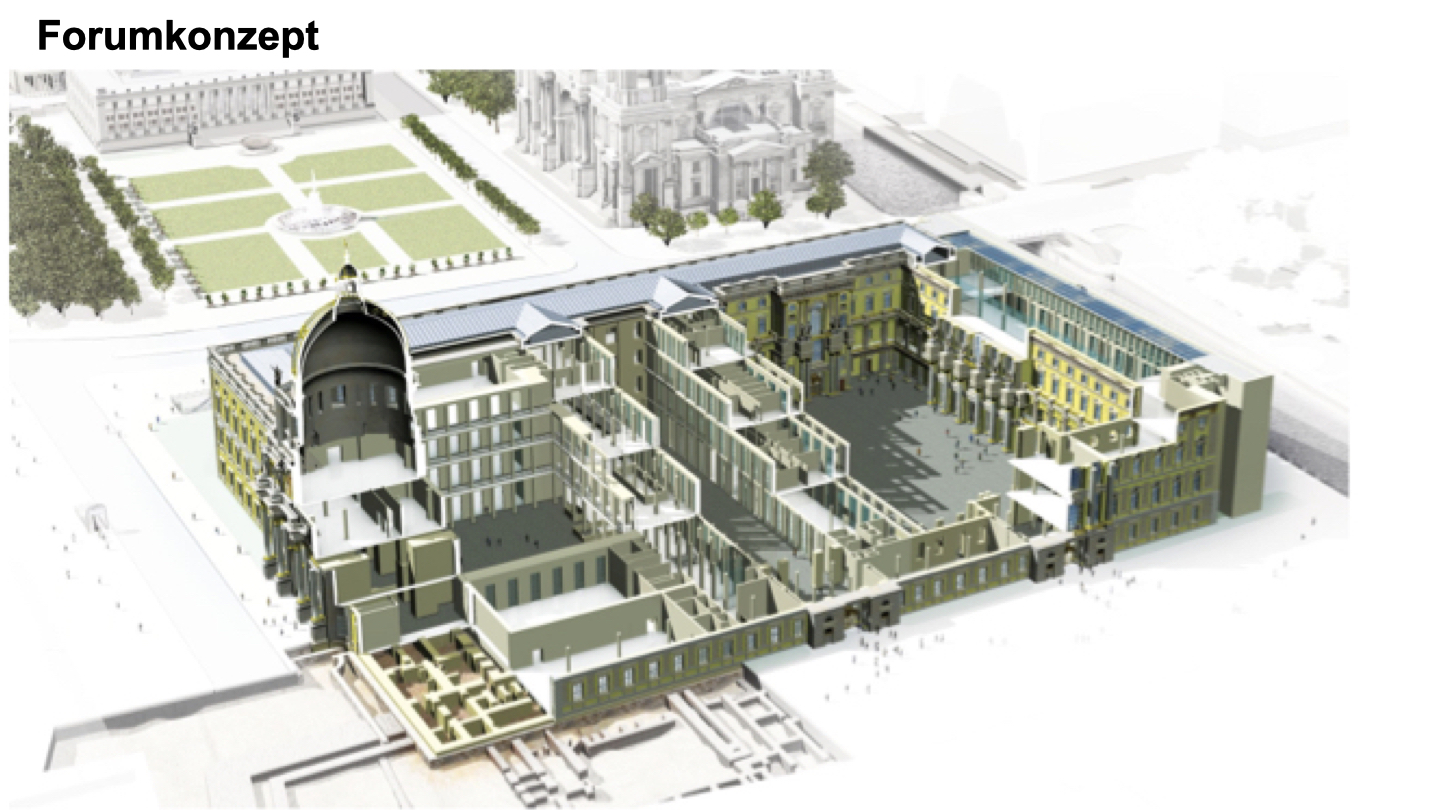
There was the program, for 40,000sq.m. of Museum, Event and Activity space, incl. the new presentation of the SMB/EM-AKu collections, the « non-european » collections of the National Museums in
SLIDE 12
And there was the contents of those collections
first the history of the Berliner Kunstkammer, early cradle of humanist, romantic and modern sciences of nature, culture and display, site of Leibniz’s early (lost?) vision of a methodical science of relationality, and origin of the museum heritage on Berlin’s Museum Island.
SLIDE 13
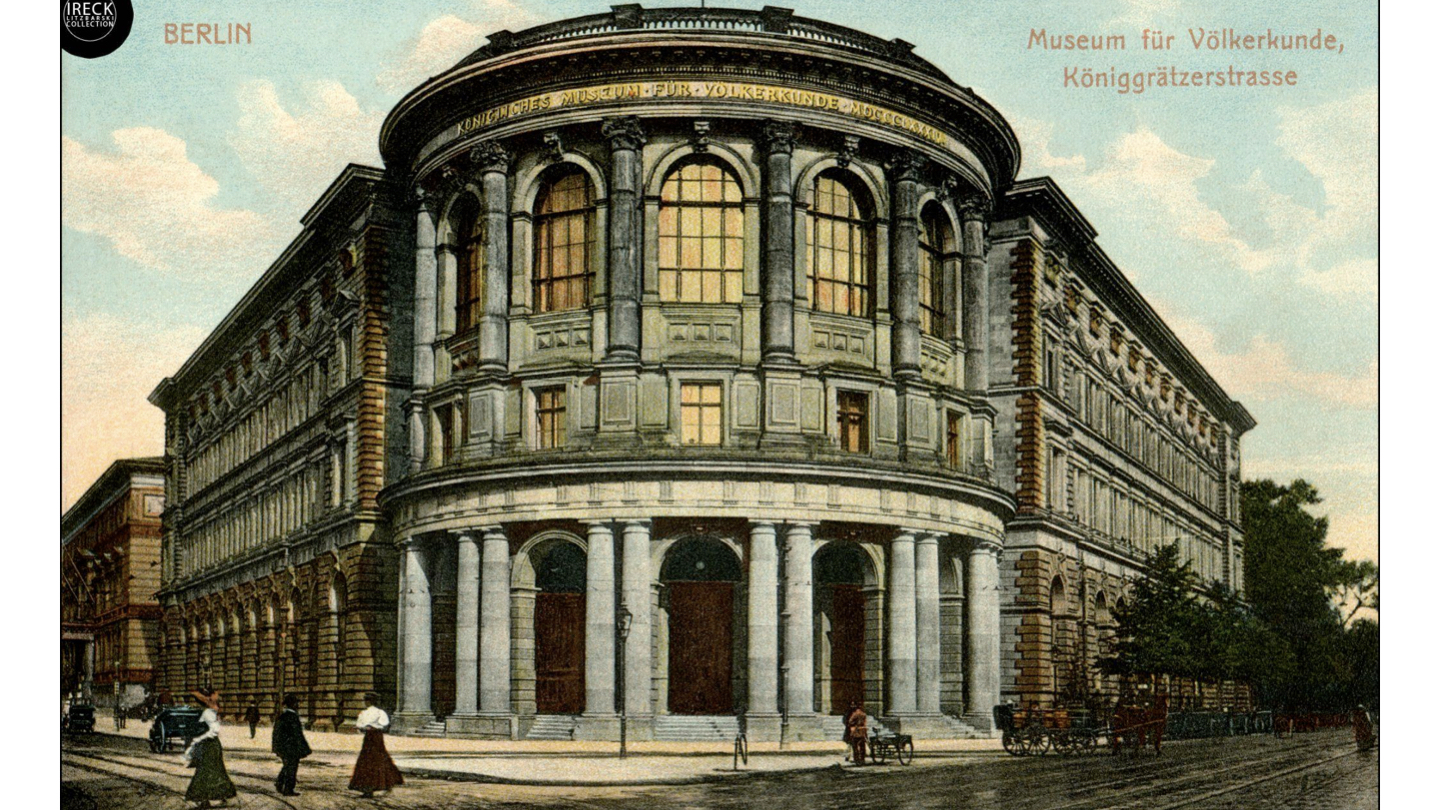
…then also the modern heritage of Adolf Bastian’s Museum für Völkerkunde, (which sought to bring representative objects from all « primitive » cultures (Naturvölker) in view of extinction together into a great Universal Archive of Elementary Human Thoughts serving all of Humanity.
SLIDE 14
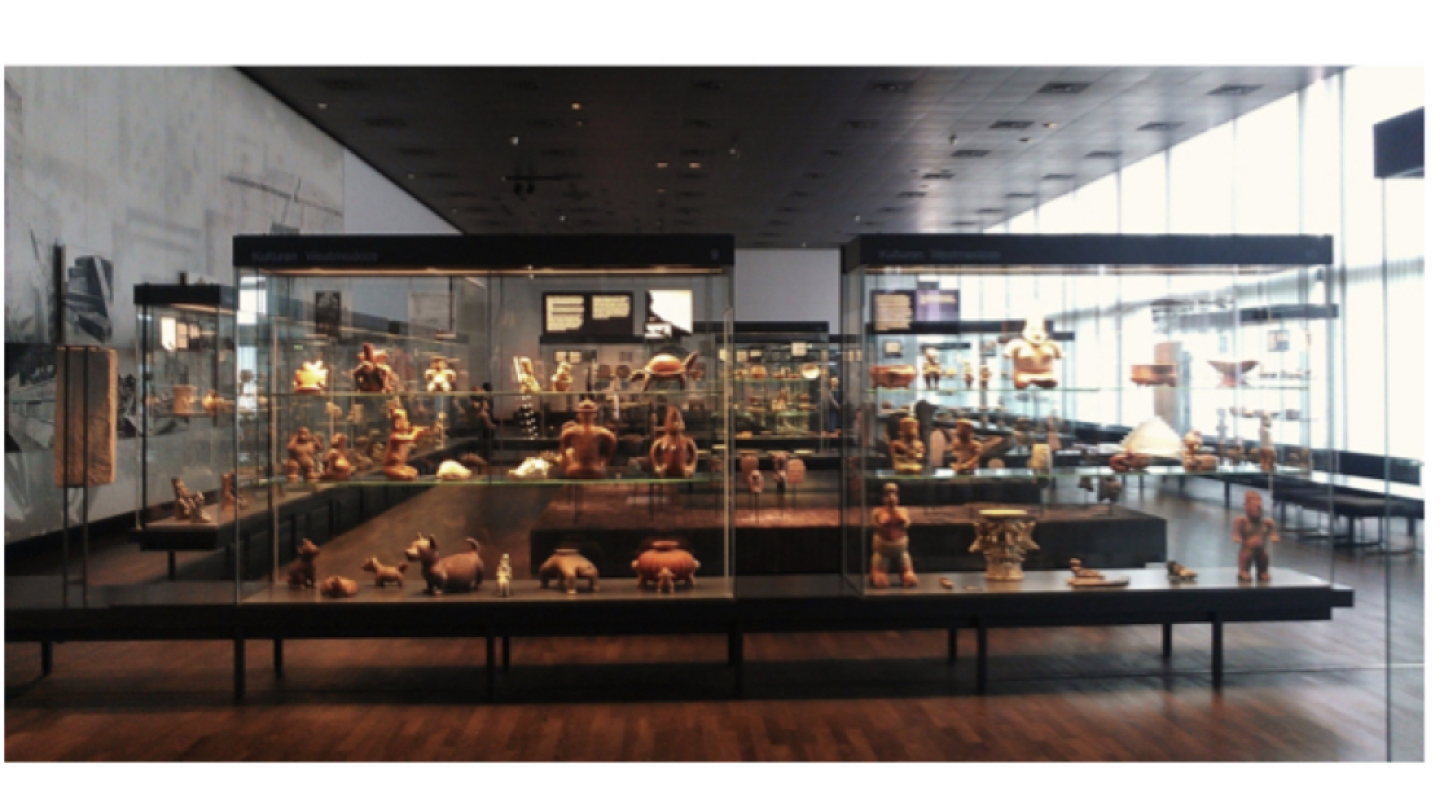
Most concretely and critically, the task involved a new presentation of these collections for today – each object from each culture and community speaking of knowledge projects and practice contexts in large part lost to history.
SLIDE 15
The task as given felt like a bundle of the biggest and most contradictory ambitions, coming together in an institution grown in part on the detestable tradition of the « world museum » while aiming to become a new kind of more-than-museum, a cosmopolitan forum of world cultures.
SLIDE 16 – Digitalize That!
SLIDE 17
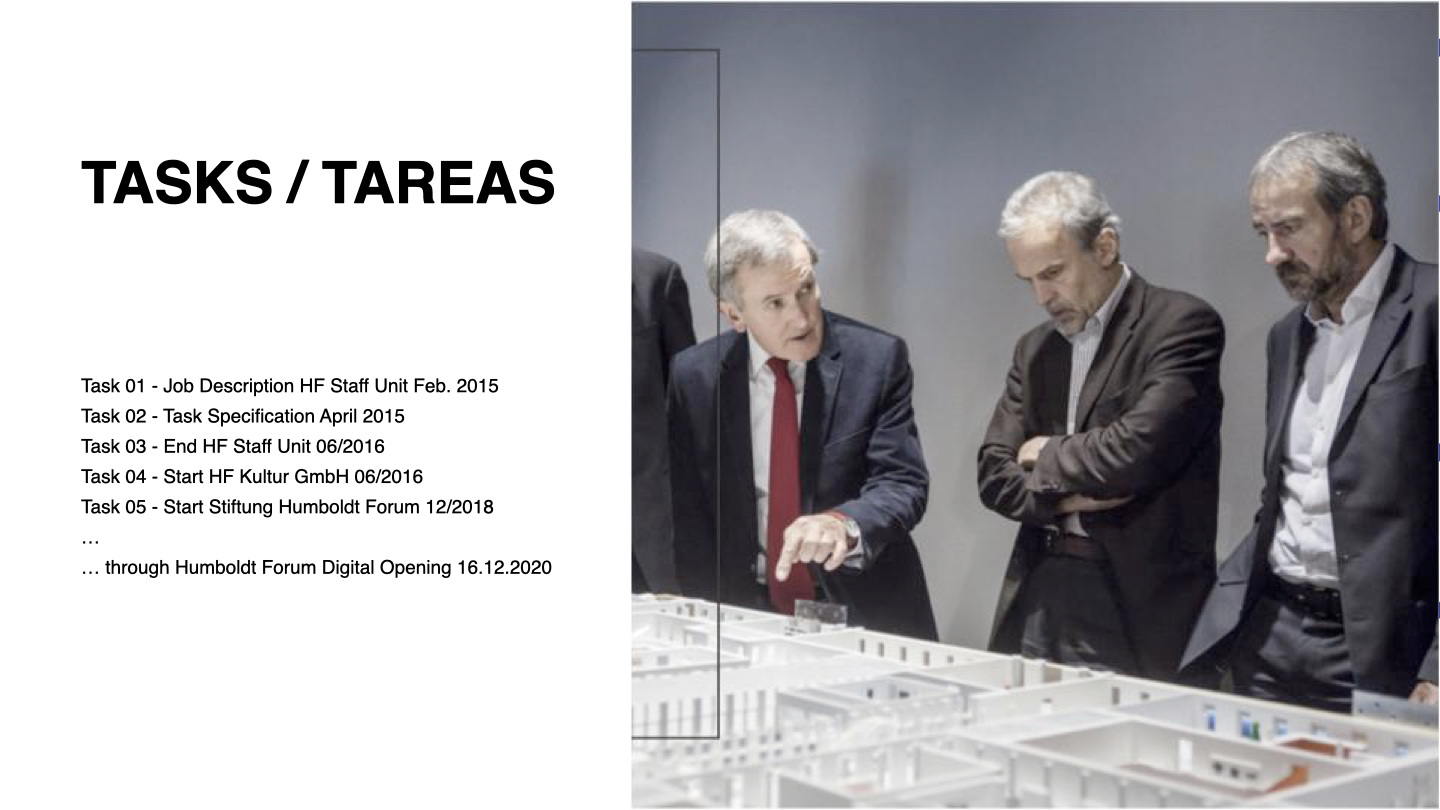
Officially, the task itself was given in a sequence of forms –
from the beginning of digital concept work in April of 2015 …
SLIDE 18
Tasking 01 – Job Opening
SLIDE 19
Tasking 02 – Agreed Job Assignment Stabsstelle Humboldt Forum
for example: (read)
SLIDE 20
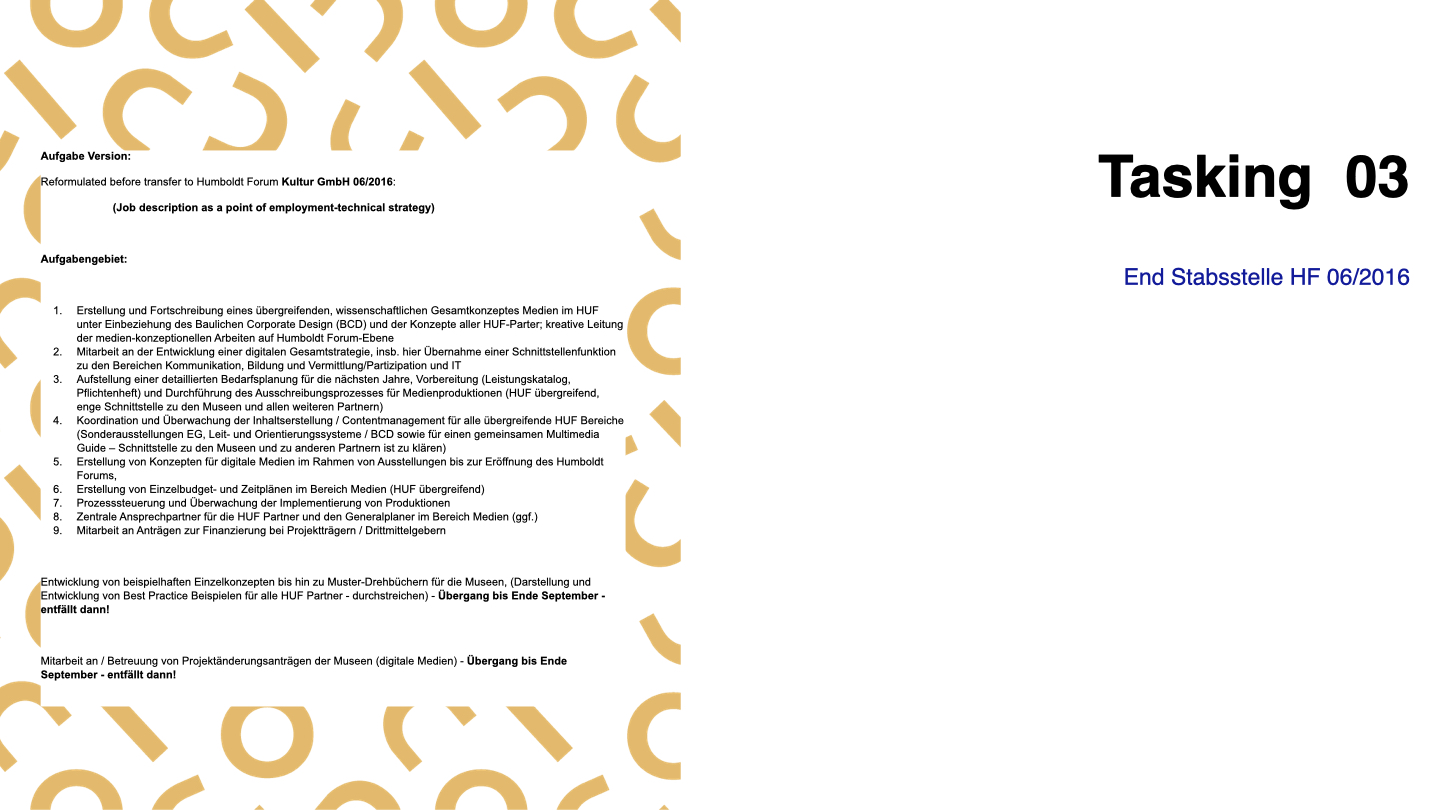
Tasking 03 – Performed Job Description
SLIDE 21
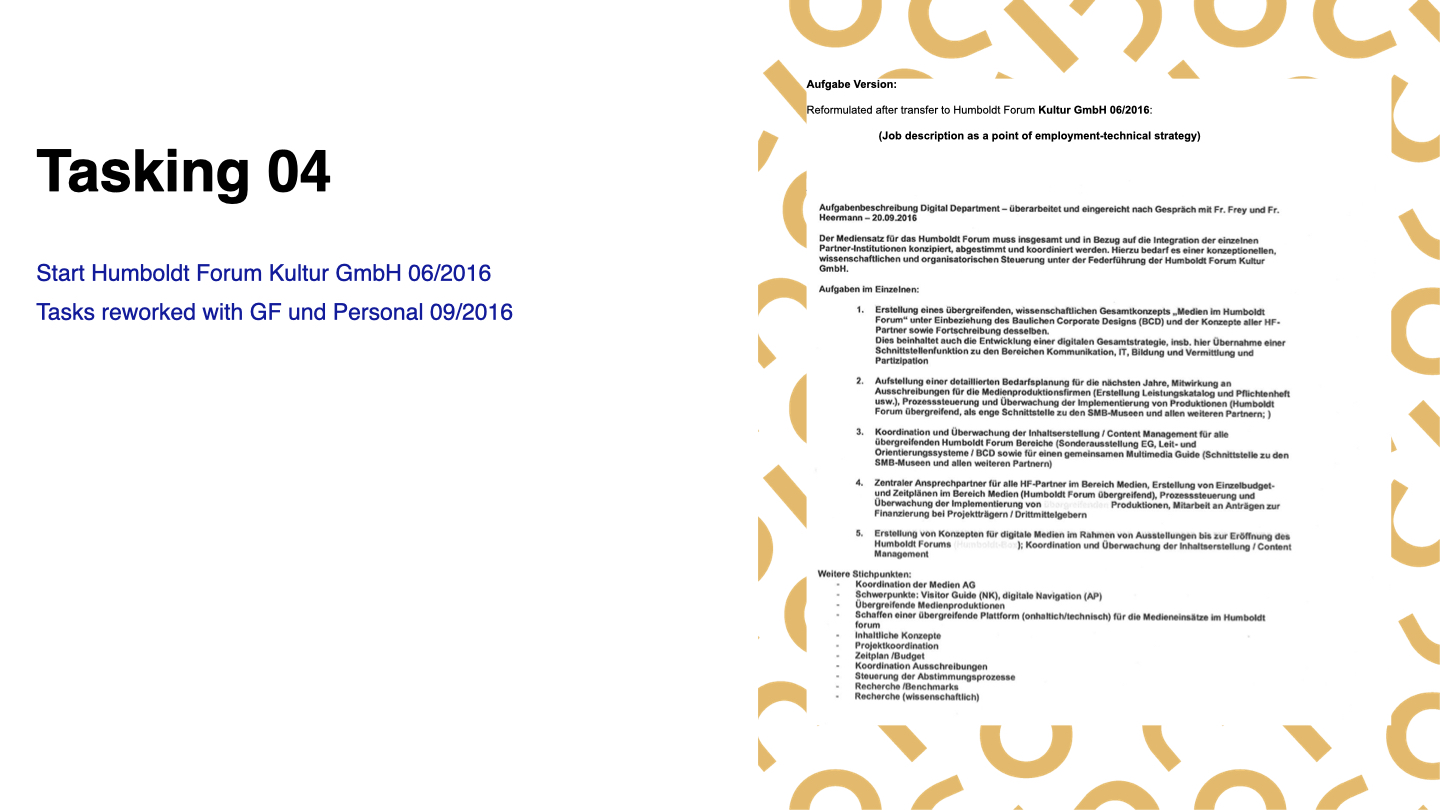
Tasking 04 – New Job Description Kultur GmbH
(((next: Tasking 05 – New Job Description Stiftung Humboldt Forum)))
…through to the digital grand-opening on December 16 of 2020,
each subsequent version preserving major elements but evolving in granularity and concreteness as concept and planning moved forward toward implementations.
SLIDE 22
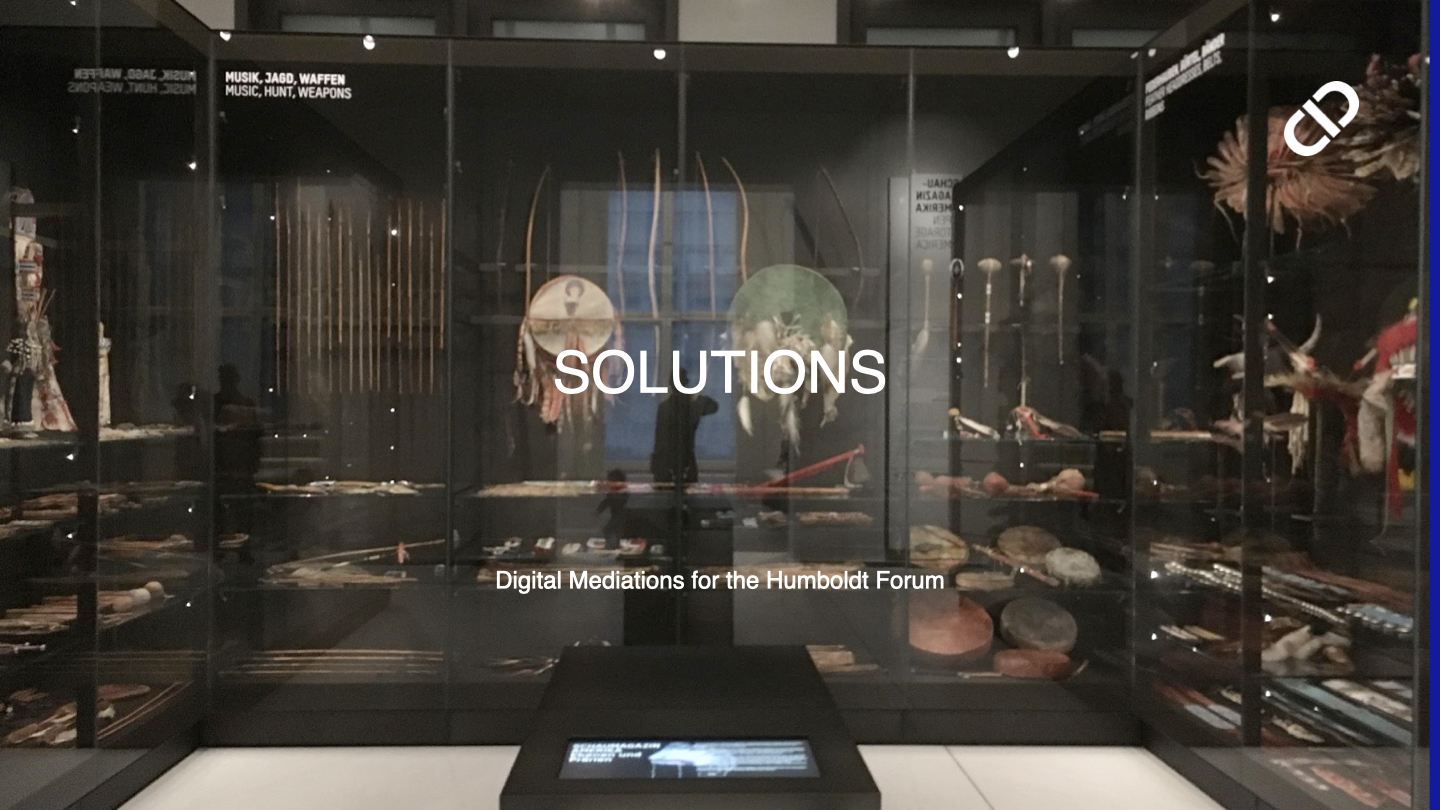
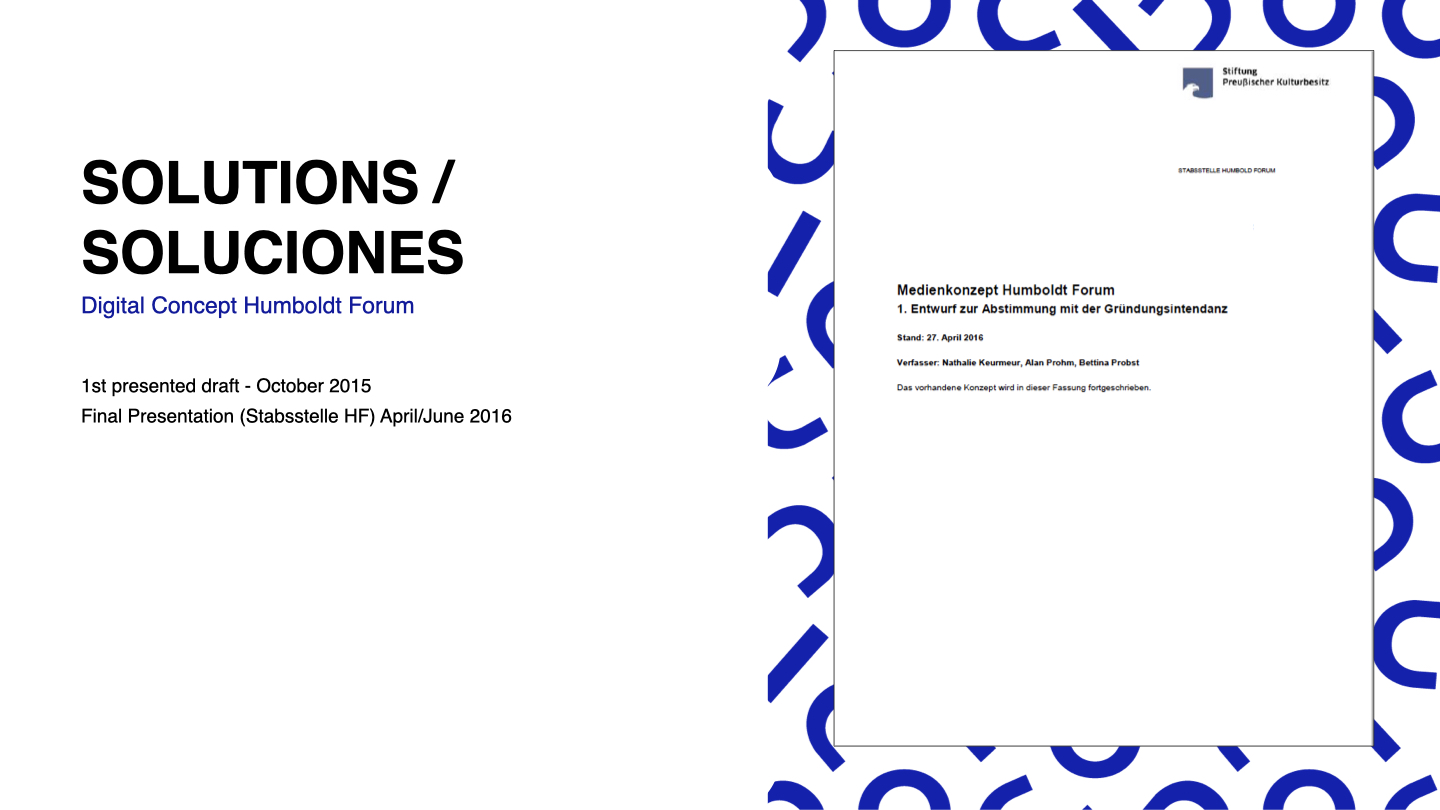
SOLUTIONS
SLIDE 23 – SOLUTIONS
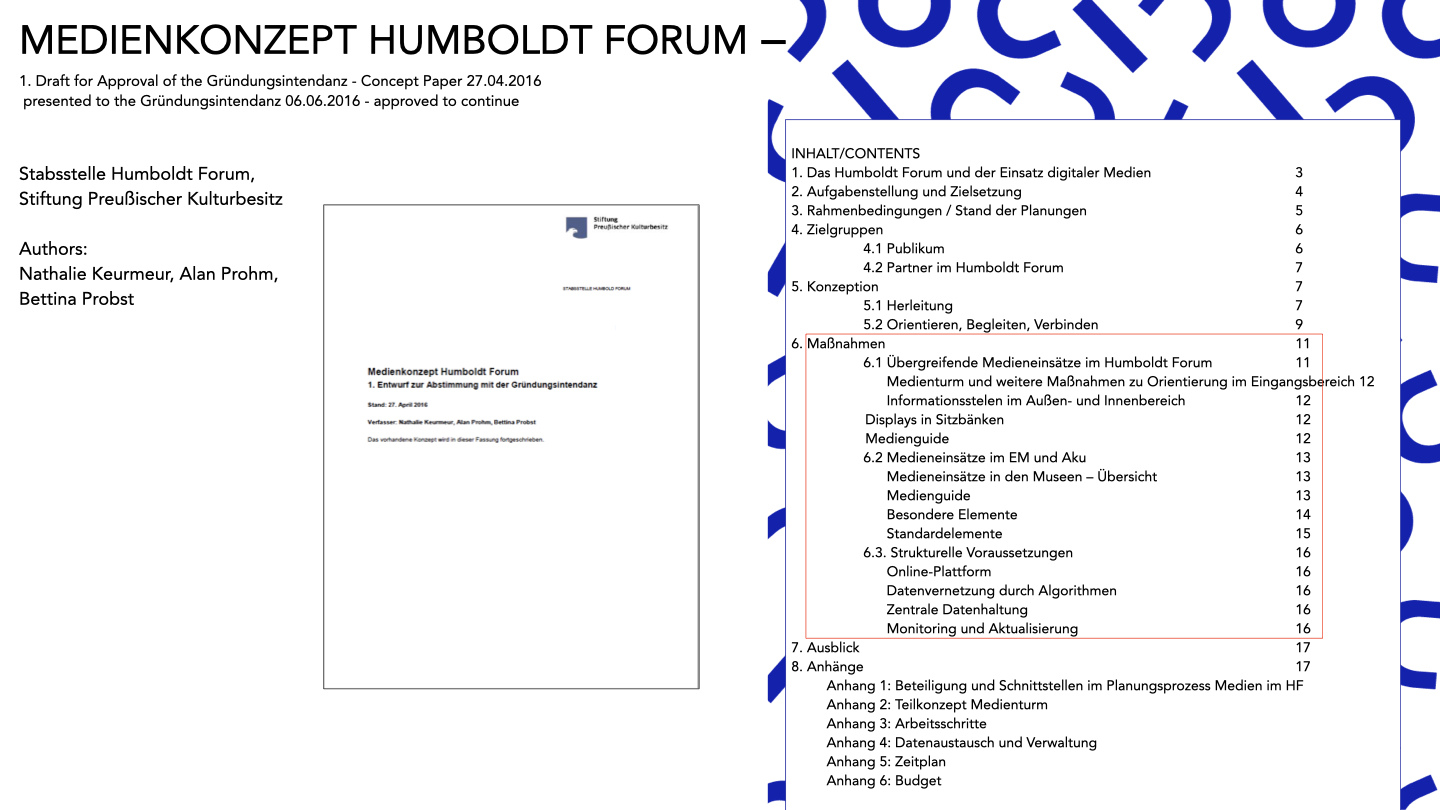
The solutions proposed took the form of concept proposals and planning documents of various sorts at various junctures between 2015 and 2020;
SLIDE 24
…; backed up each year with conference presentations and publications.
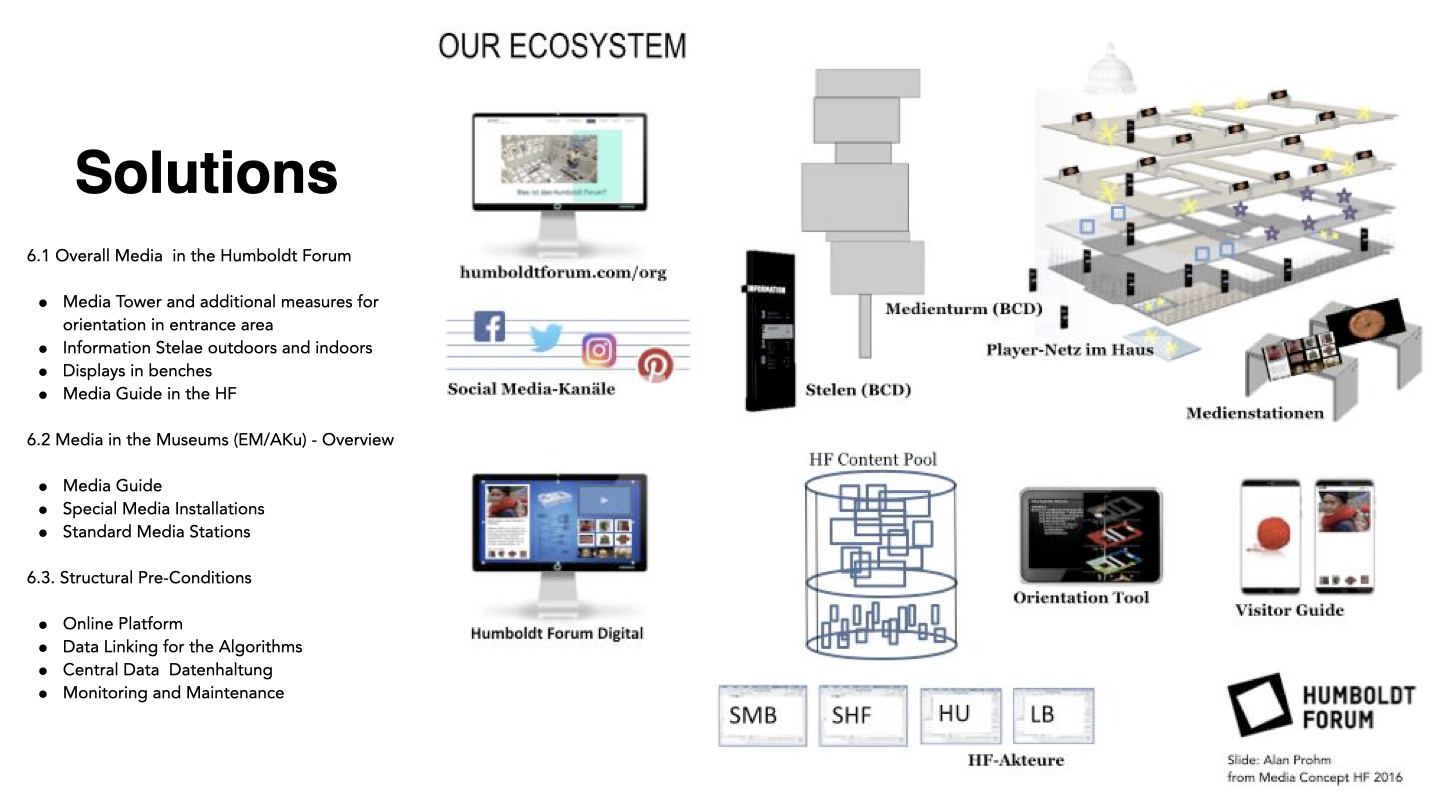
Concretely this came down to proposals under three main headings:
Orientation / Accompaniment / Connection (OBV)
Orientierung
Begleitung
Verbindung
structural preconditions
SLIDE 25
The whole proposed offering included: read from slide
SLIDE 26
…with at the center a yet to be defined « content pool » and data integration pipeline for realizing the fullest potentials, …
SLIDE 27
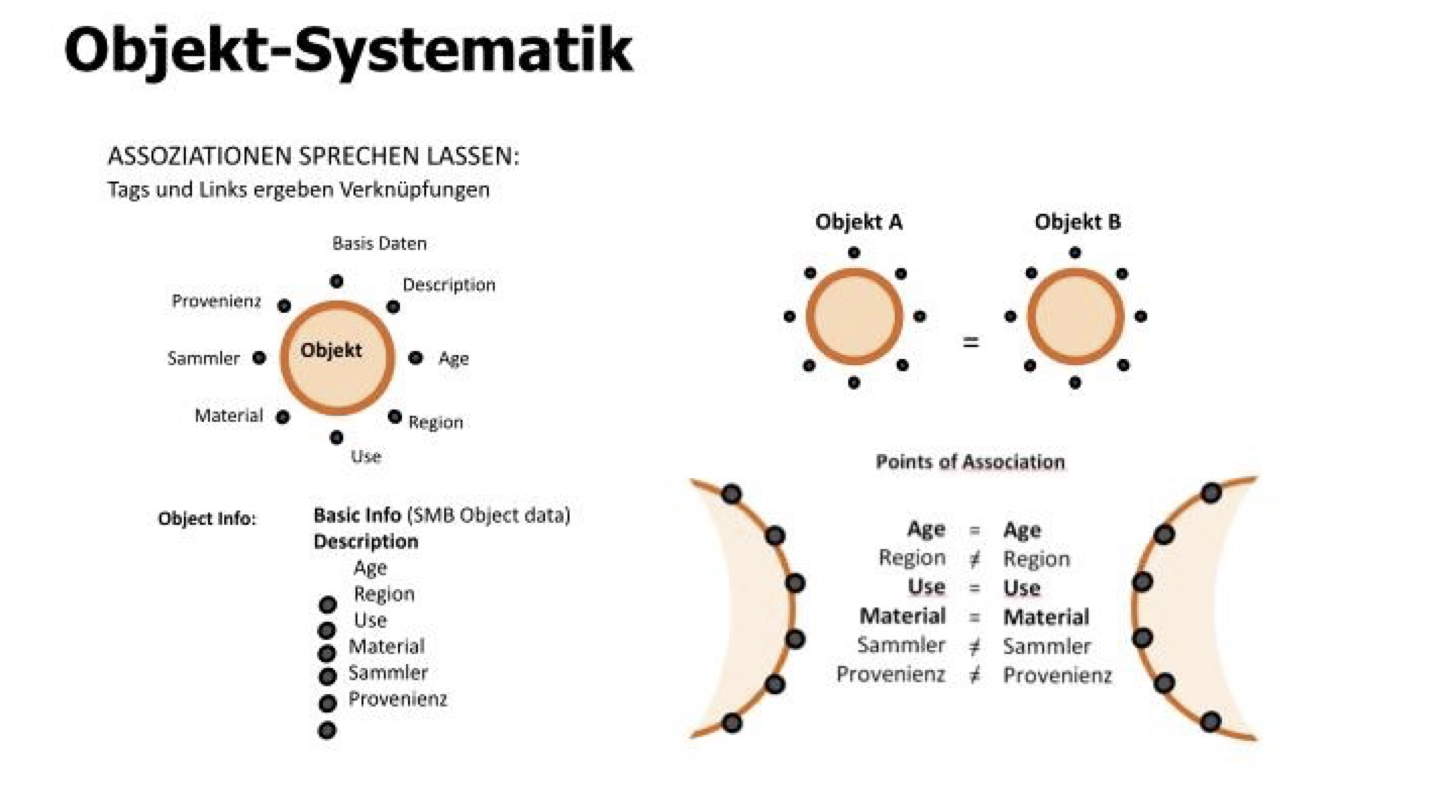
…which we saw in curated semantic linking of the collections data sets.
SLIDE 28
Content was thus planned to be able to flow through fluidly to any touchpoint, sensitive to the touchpoint and the user, to overcome atomisation and bring wholes of thought, knowledge and encounter to life.
SLIDE 29
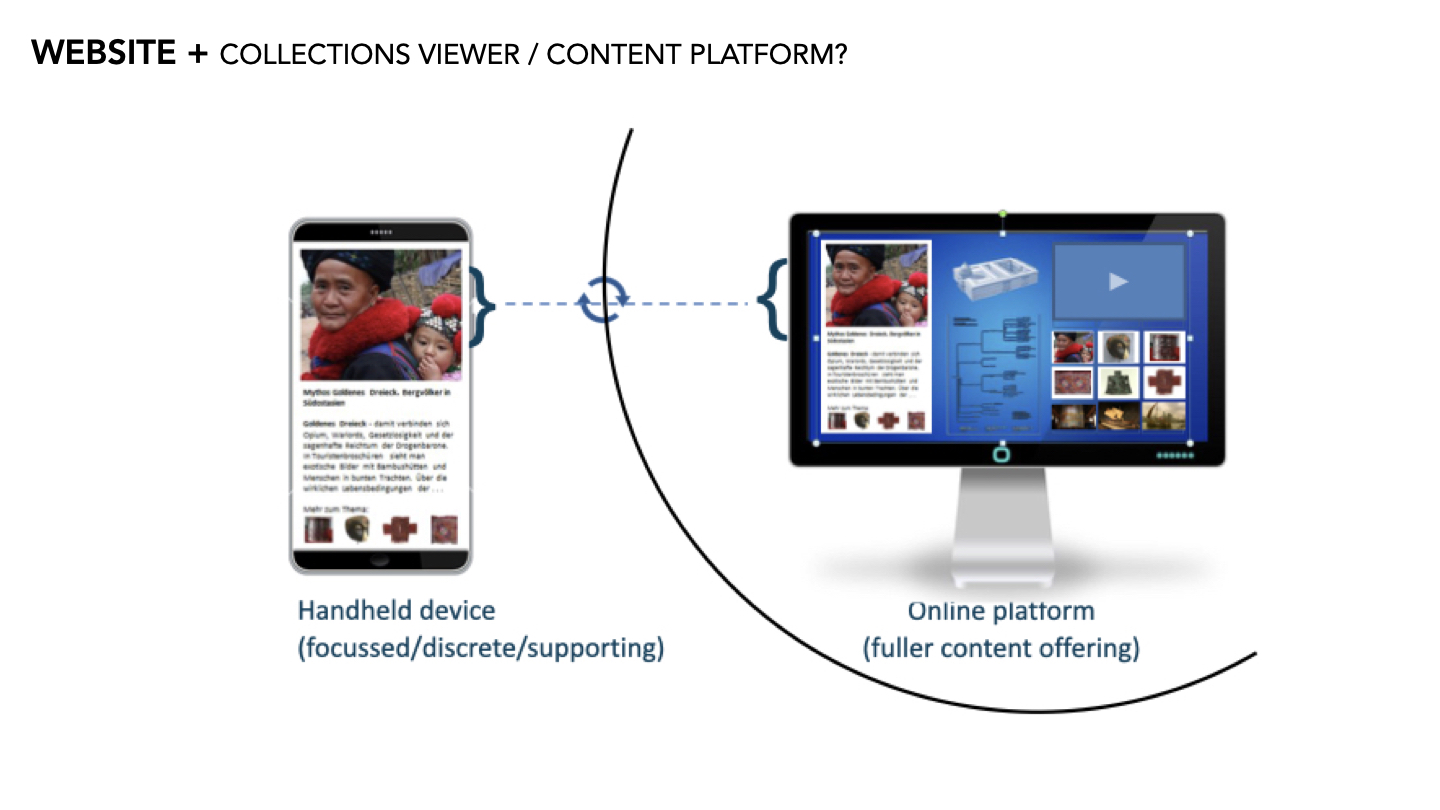
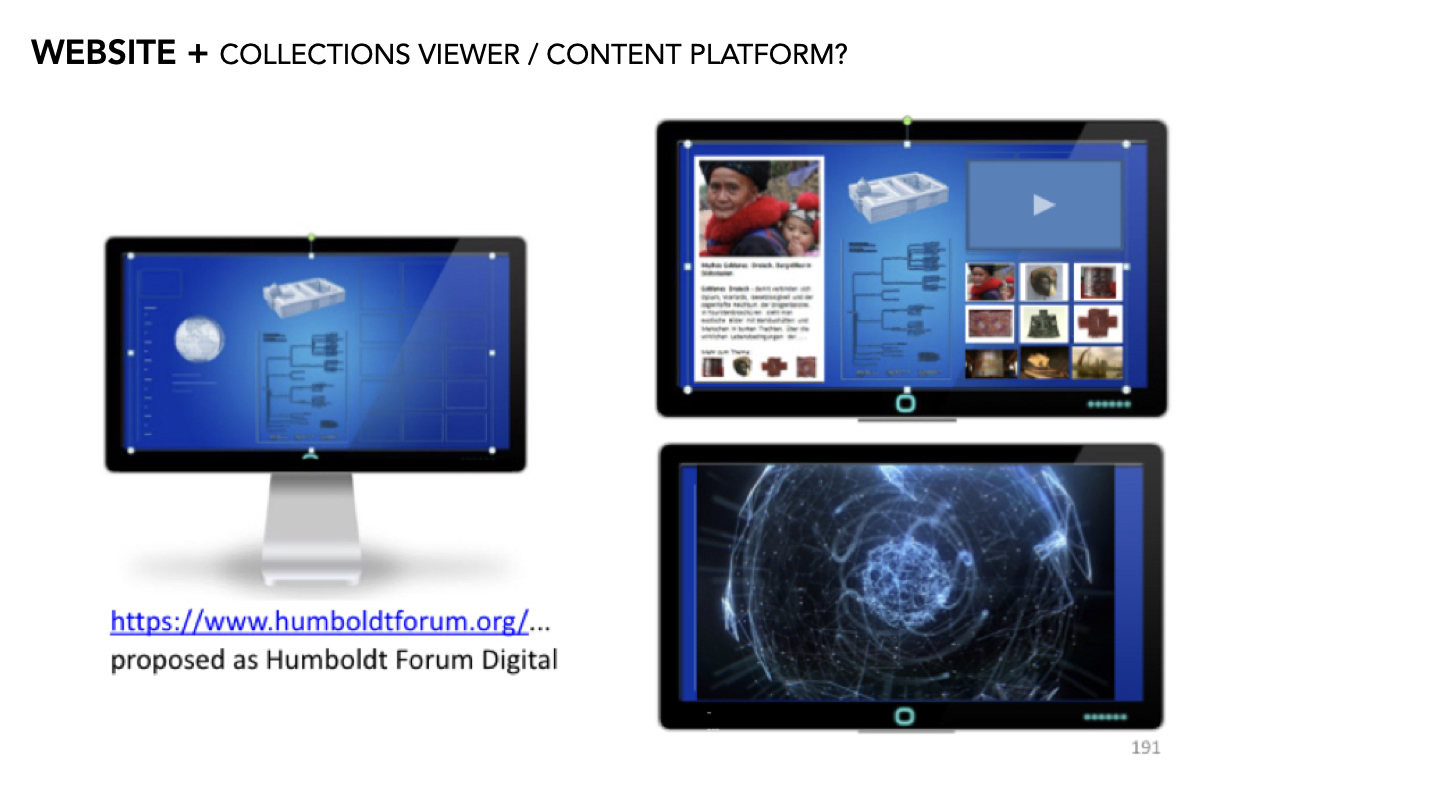
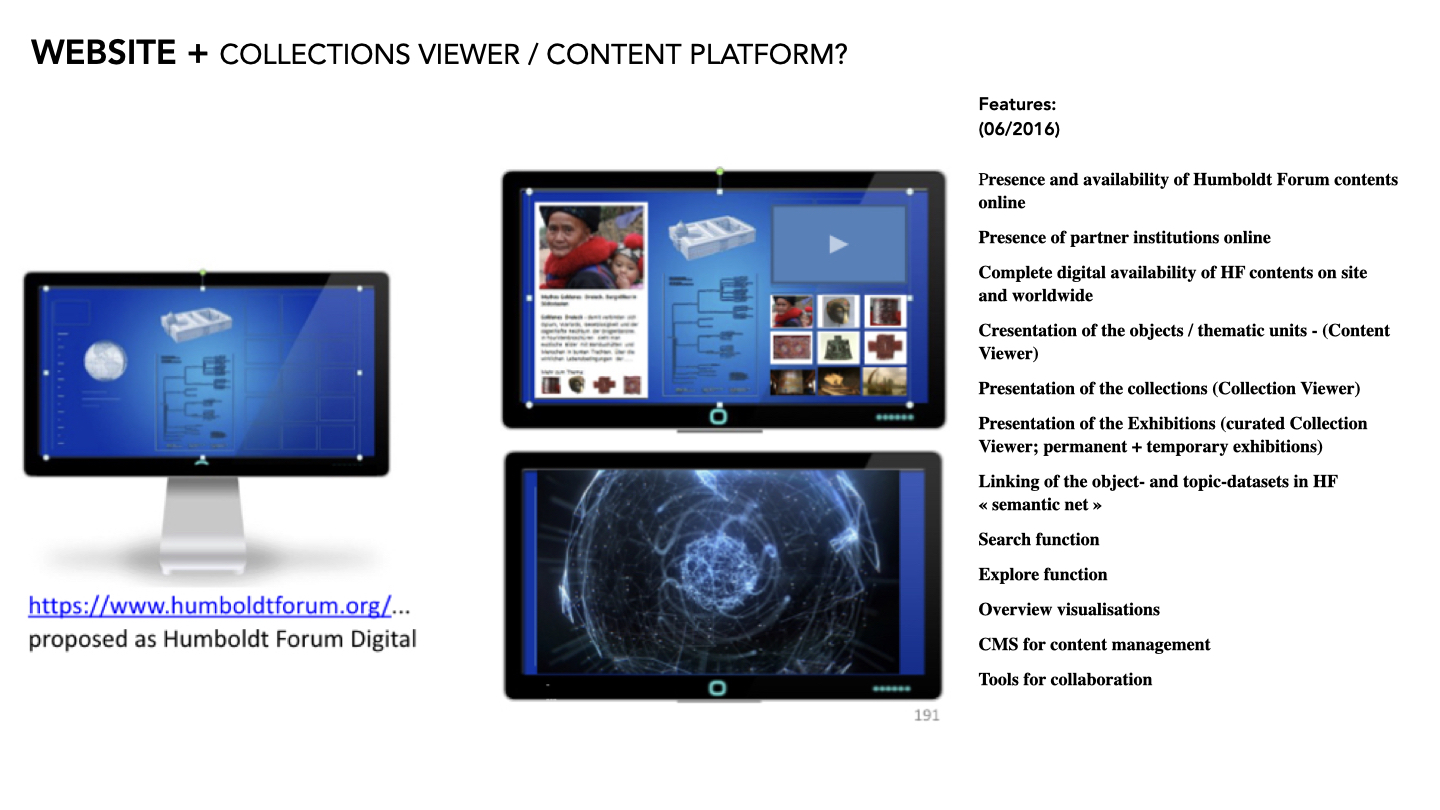
The culmination of this was the full content platform, a content viewer, proposed in various formulations as Collections Viewer, Content Cosmos, and Humboldt Forum Digital.
SLIDE 30
Already in first concept outlines as of July of 2016, at the beginnings of the Humboldt Forum Kultur GmbH, the project/product had an online with core functions including:
presence and availability of Humboldt Forum contents online
presence of partner institutions online
complete digital availability of HF contents on site and worldwide
presentation of the objects / thematic units – (Content Viewer)
presentation of the collections (Collection Viewer)
Presentation of the Exhibitions (curated Collection Viewer; permanent + temporary exhibitions)
Linking of the object- and topic-datasets in HF « semantic net »
Search function
Explore function
Overview
CMS for content management
Tools for collaboration
SLIDE 31
In a number of conference appearances and publications I elaborated on this aspect of the long-term concept.
SLIDE 32
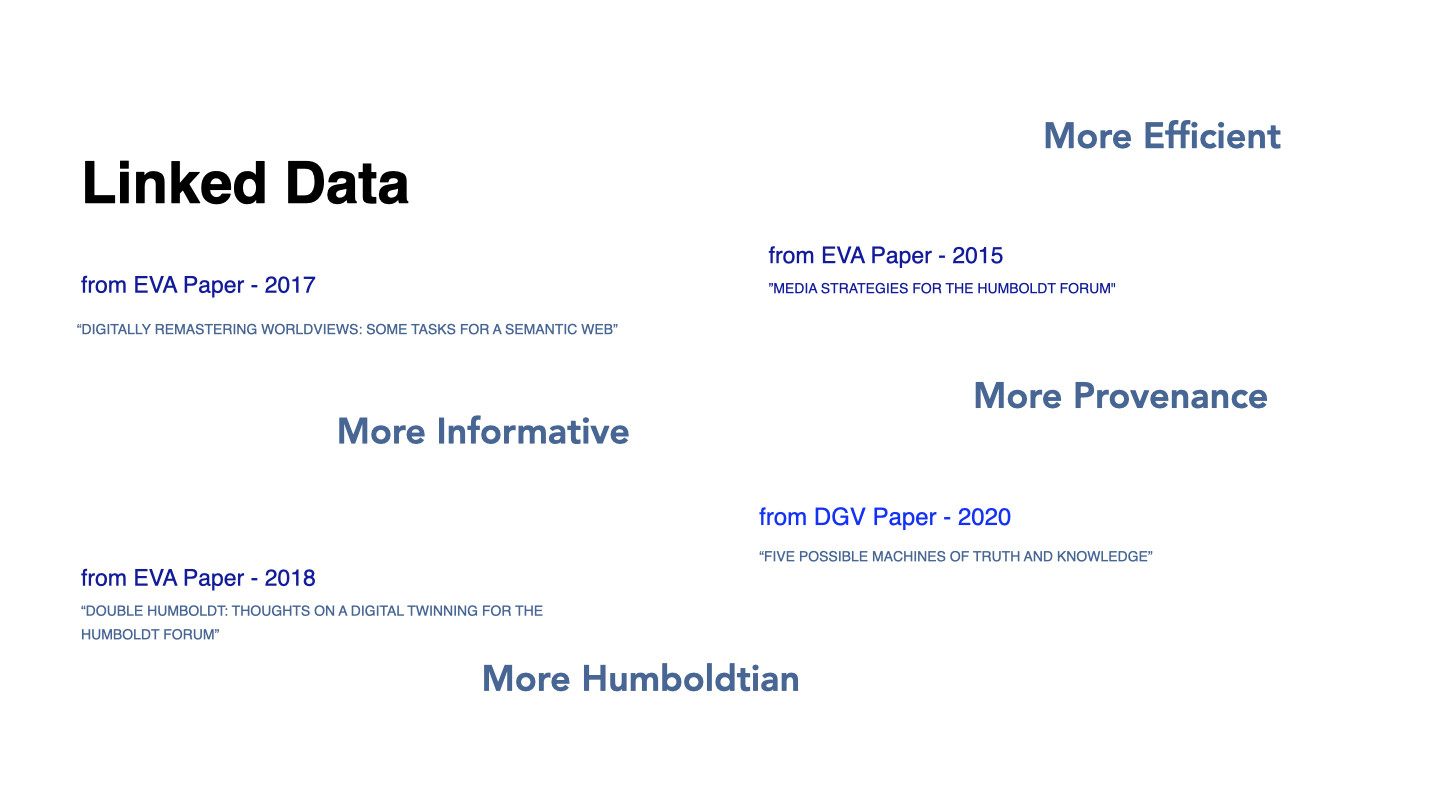
The benefits emphasized extended from :
linked data pratice yielding solutions for online collections display that are: a) more informative, b) more efficient in production, c) more Humboldtian in spirit (i.e. more « on Brand » for the Humboldt Forum and d) more helpful for surfacing and telling provenance stories.
SLIDE 33
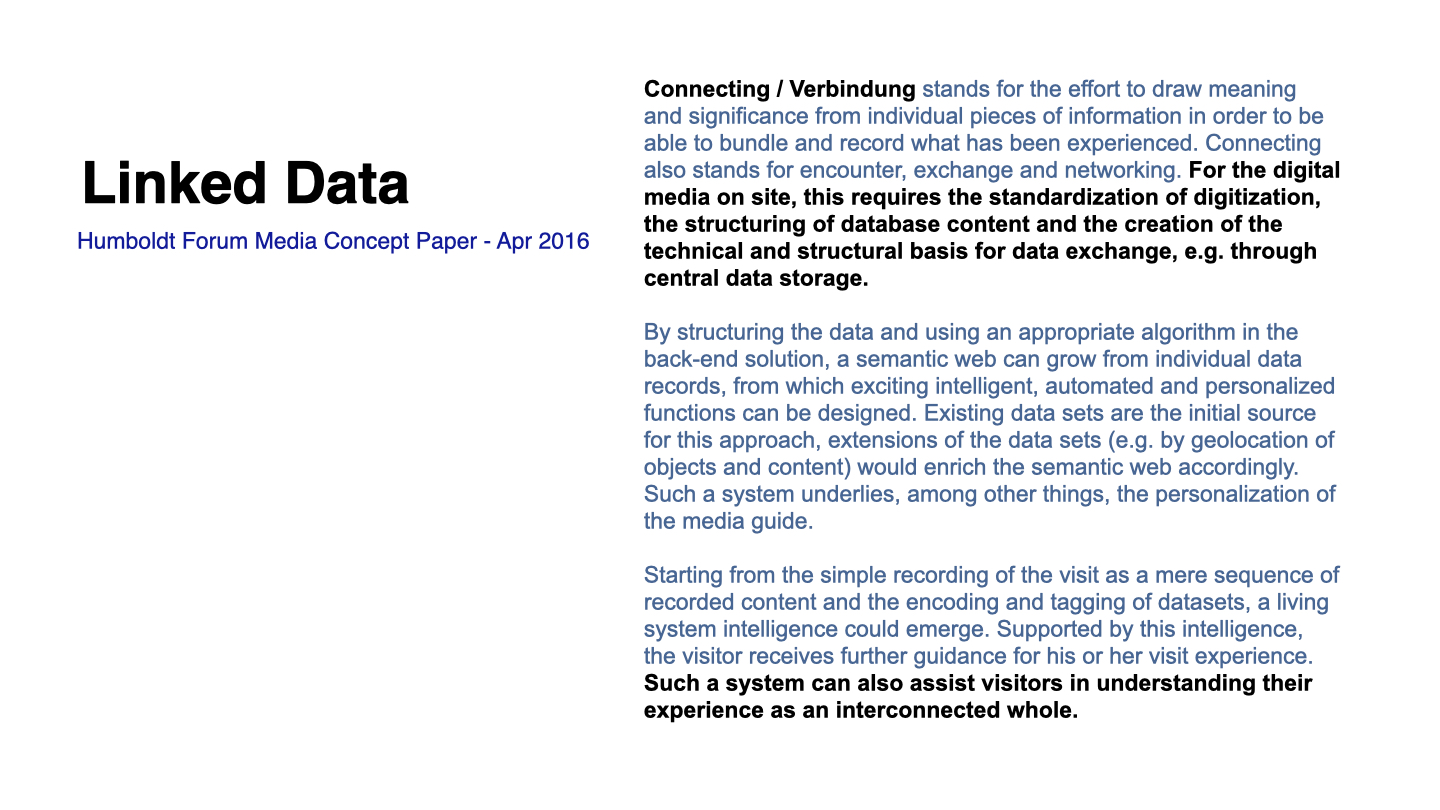
In sum, we were calling for the standardization of digitization undertakings, the structuring of database content and the creation of the technical and structural basis for data exchange, e.g. through central data storage.
… and promising that such a system could also « assist visitors in understanding their experience as an interconnected whole ».
SLIDE 34
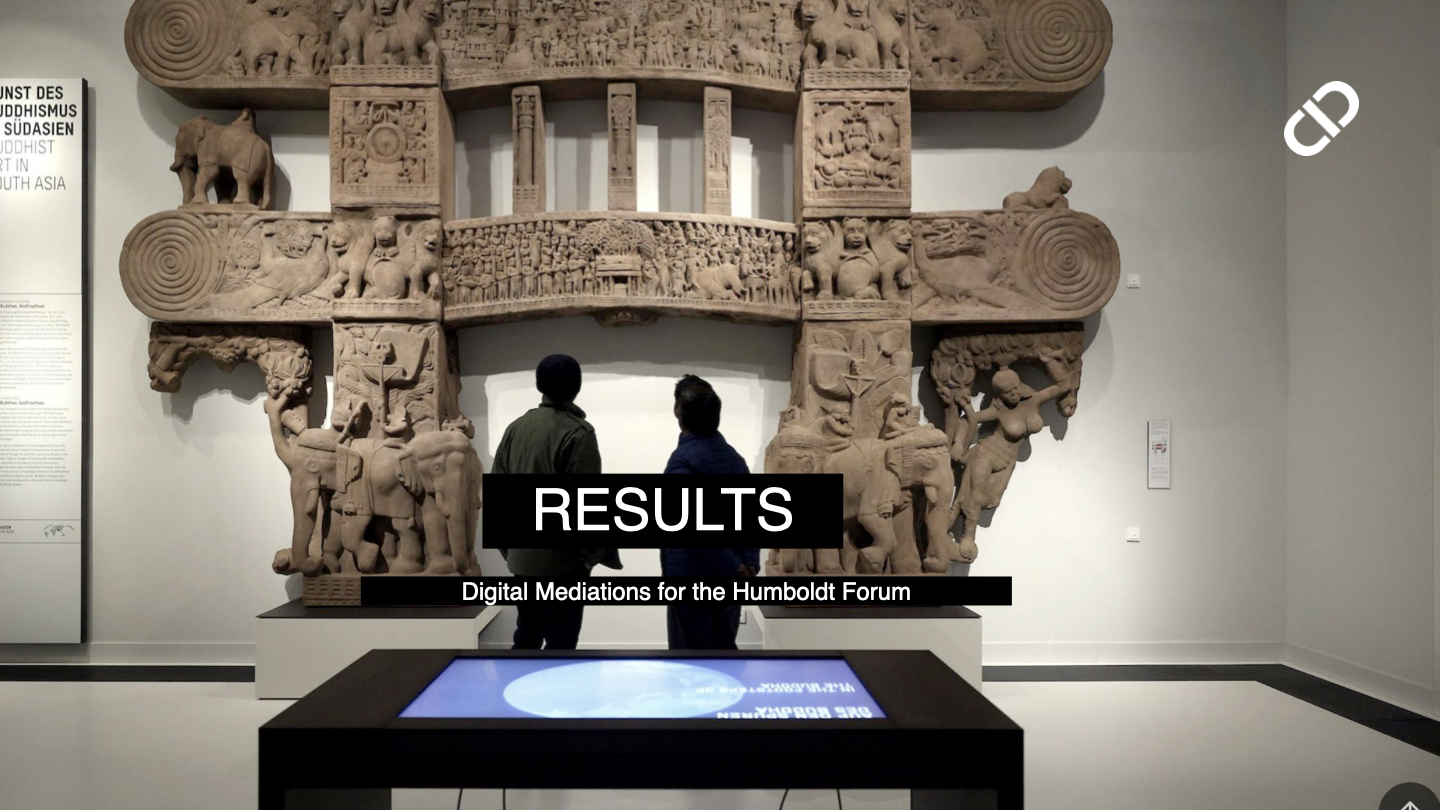
So, how did it go?
The results can now be evaluated.
SLIDE 35
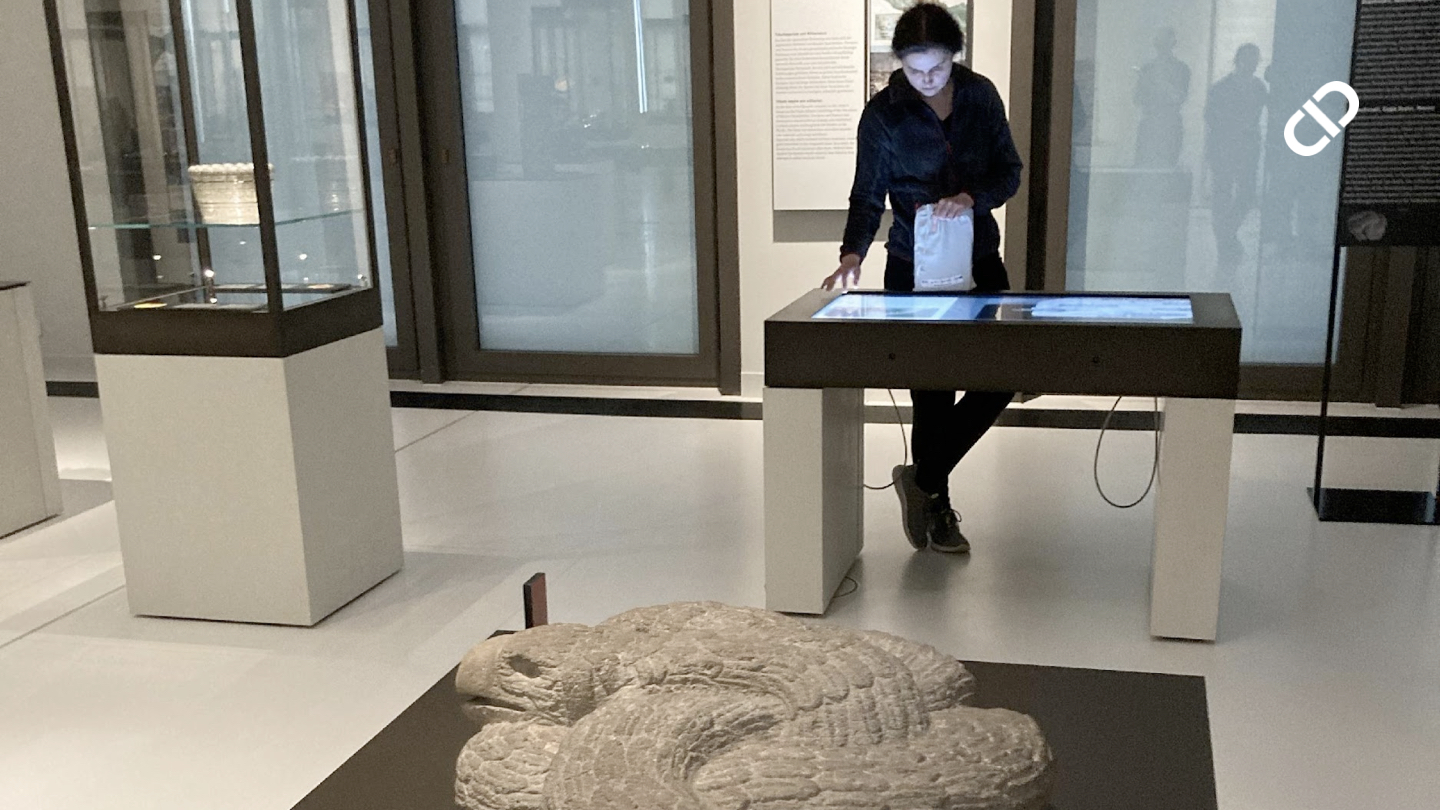
Each of the proposed products has been developed and delivered. From information Stelae
SLIDE 36
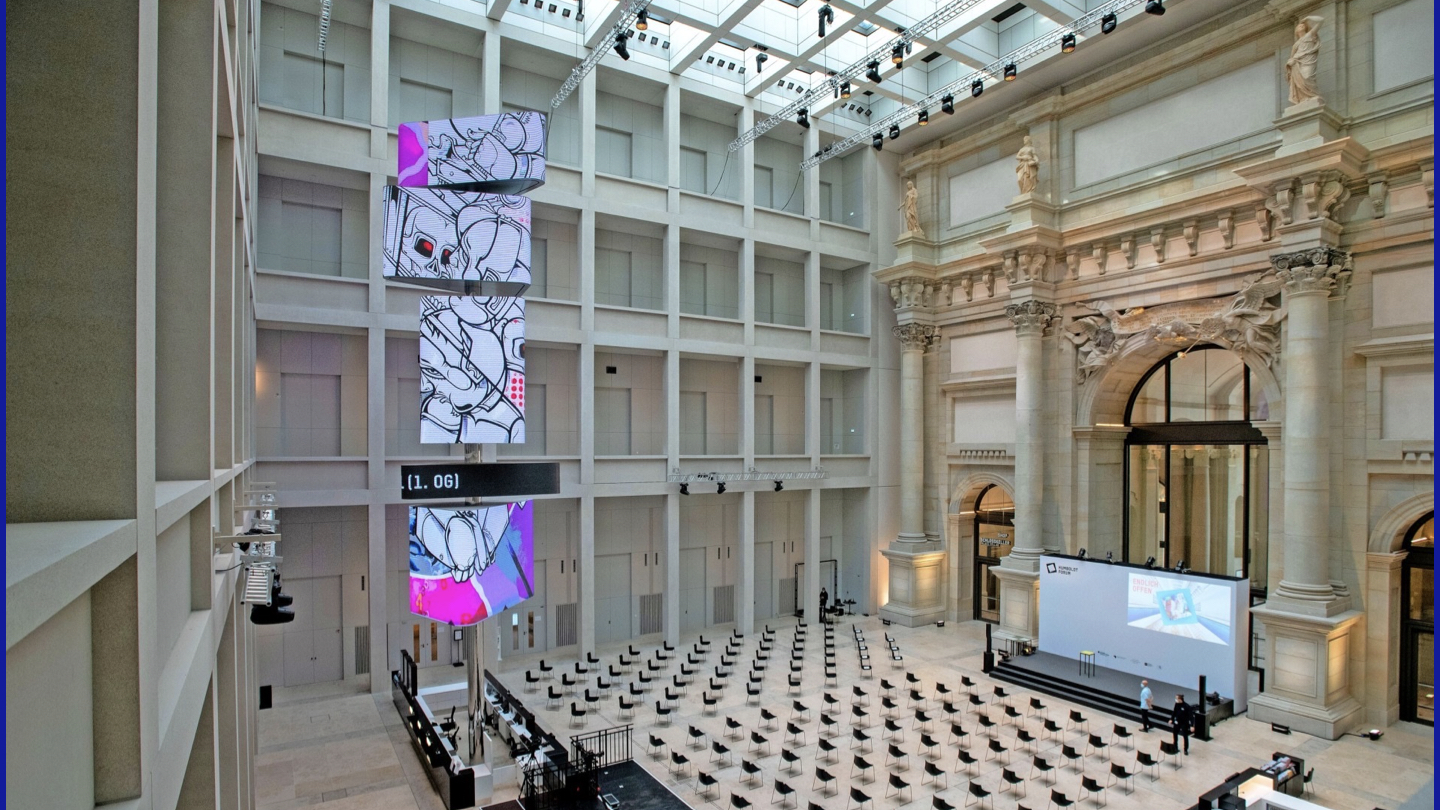
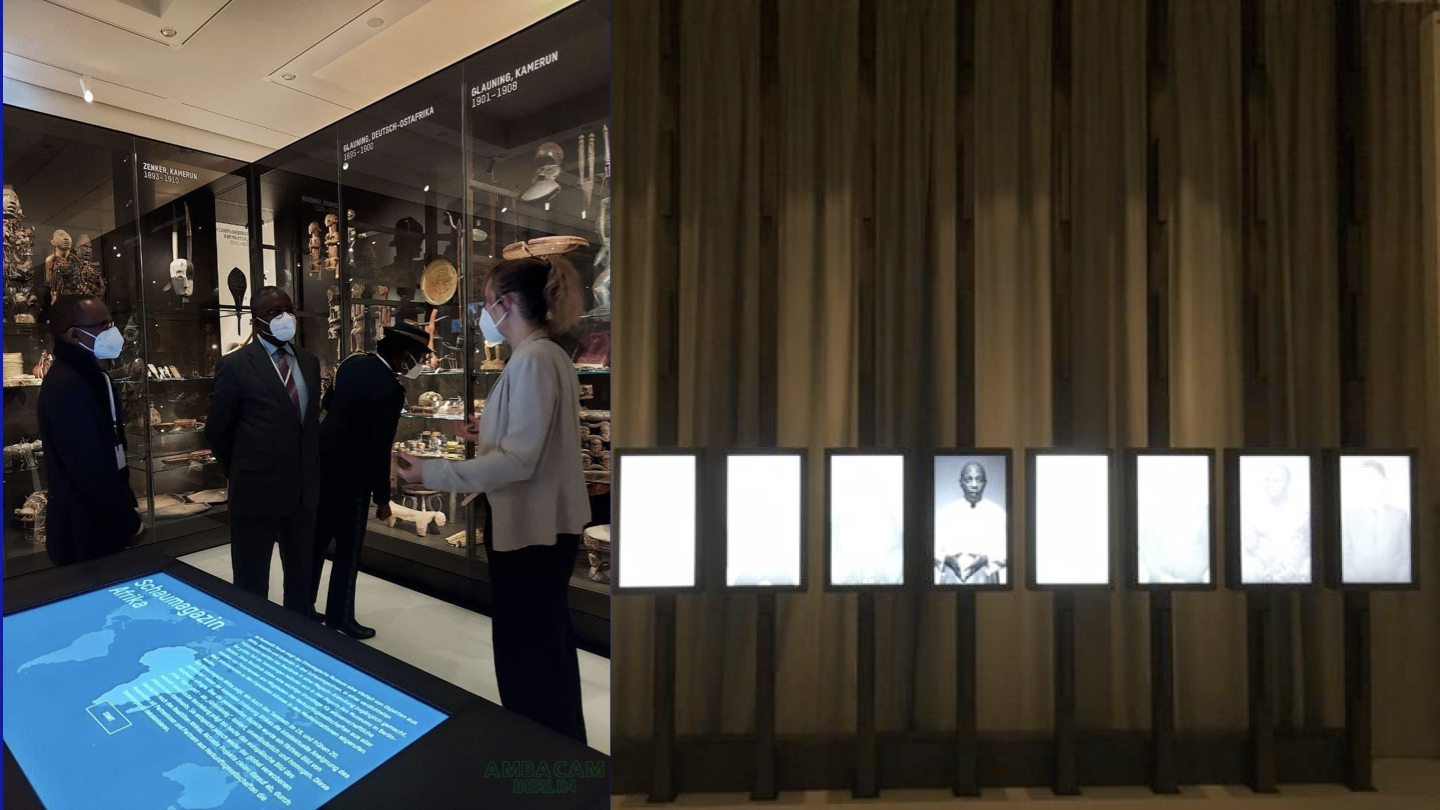
To the Media Tower
SLIDE 37
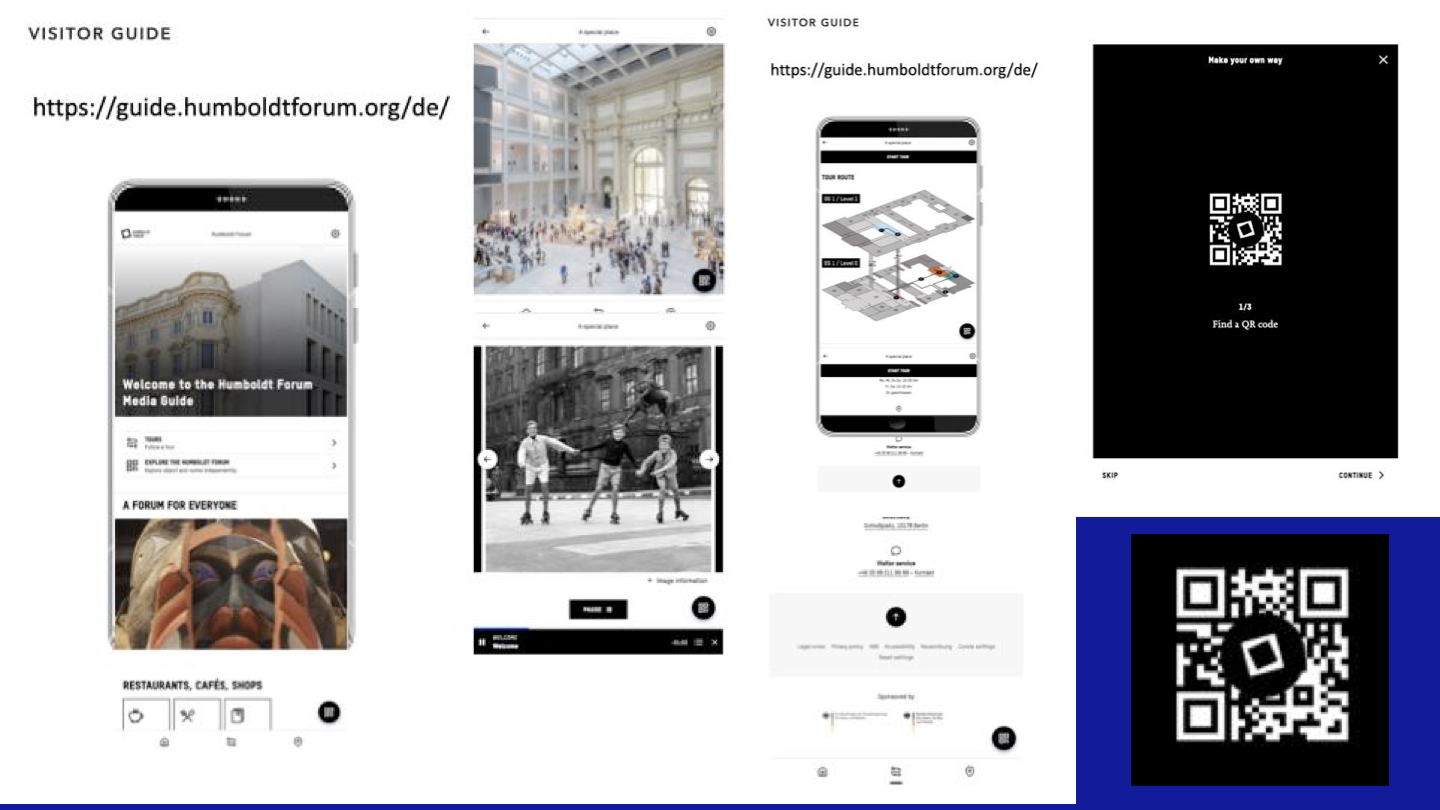
To the Visitor Guide
SLIDE 38
Through the Standard Media Station
SLIDE 39
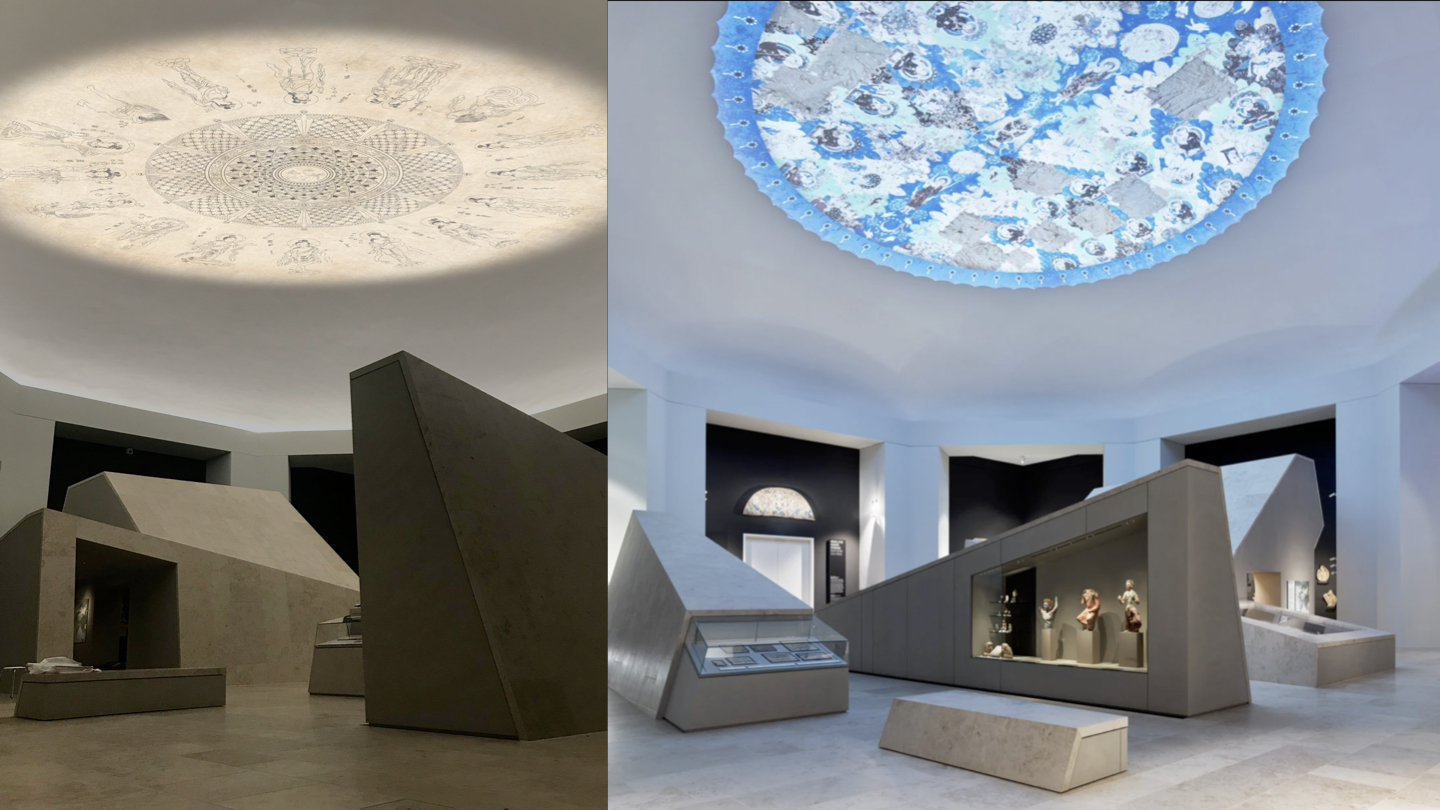
And the Special Media Installation
SLIDE 40
Bringing us to the most critical users and uses of the media offering …
SLIDE 41
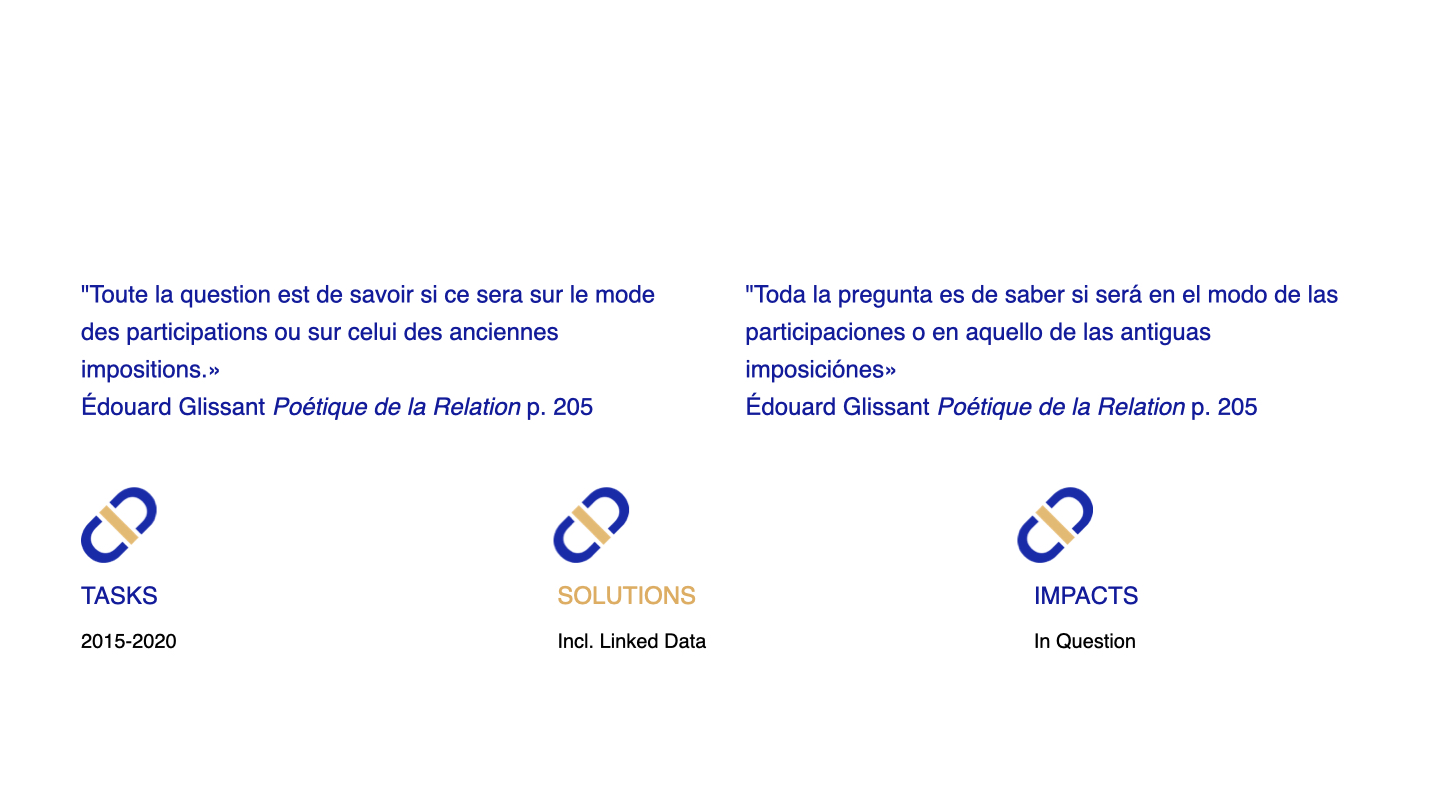
and the ultimate evaluation, – is it participatory, or another imposition?
SLIDE 42
This was the last aspect decided/approved/understood? – long leaving the ambitions of relational data practice for realizing these higher functions up in the air.
SLIDE 43
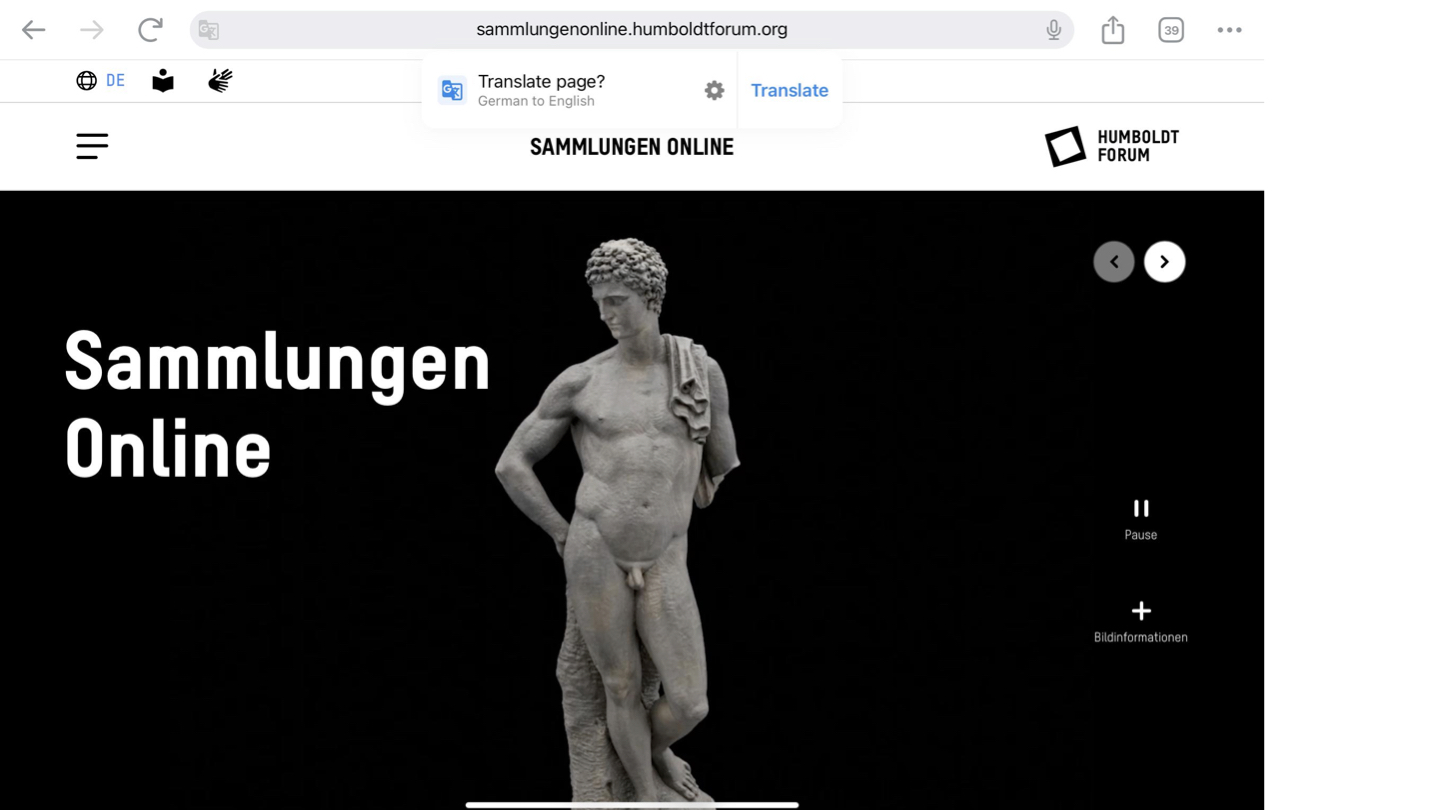
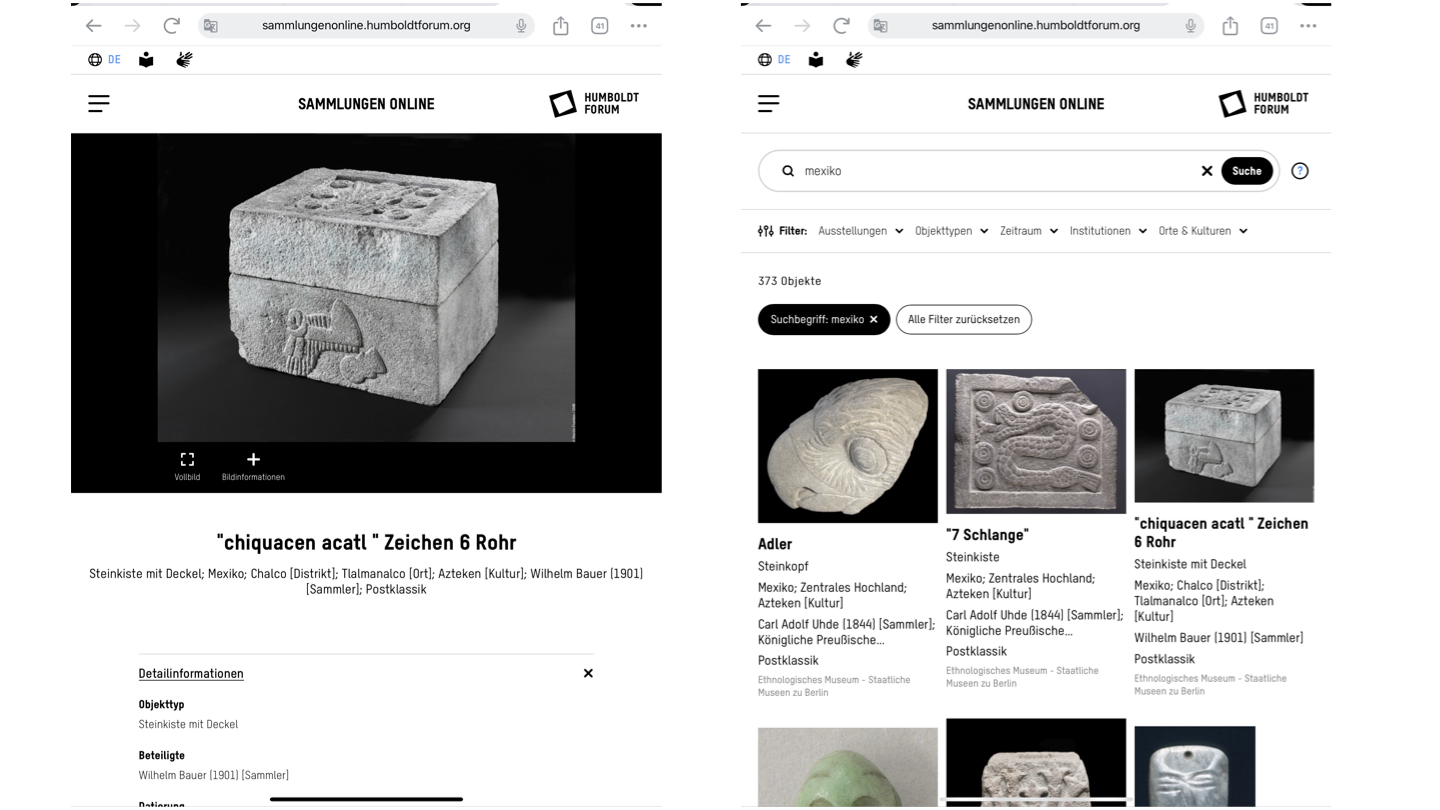
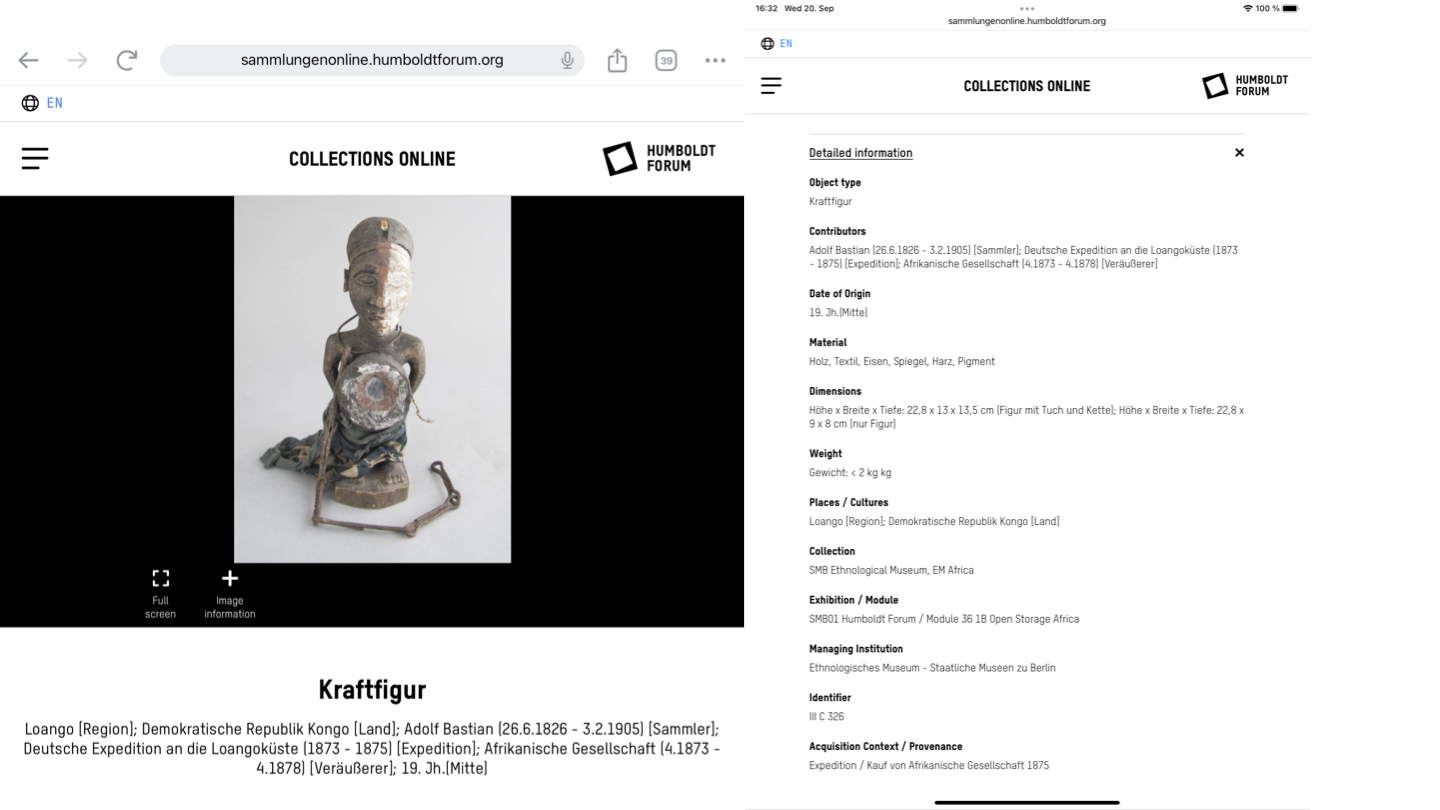
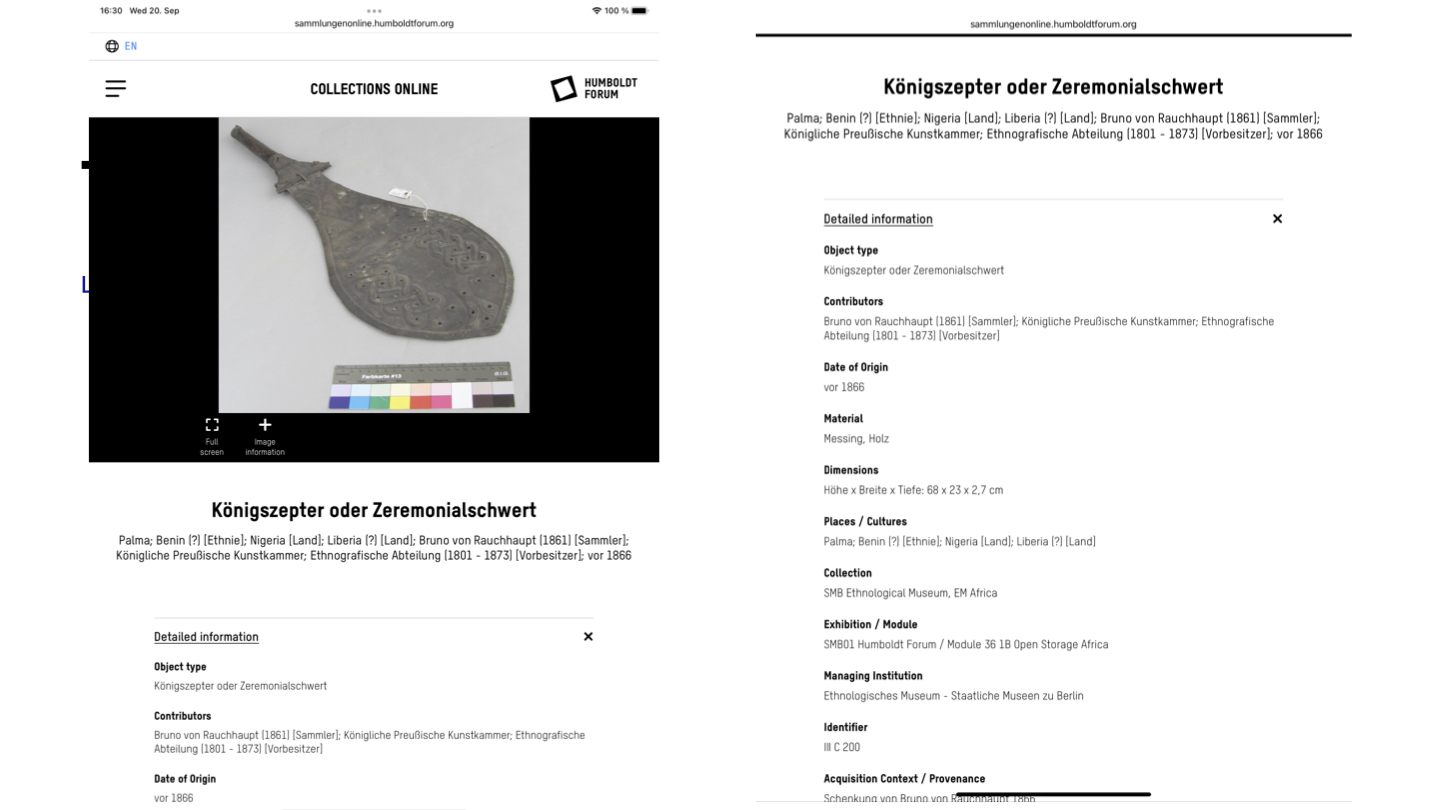
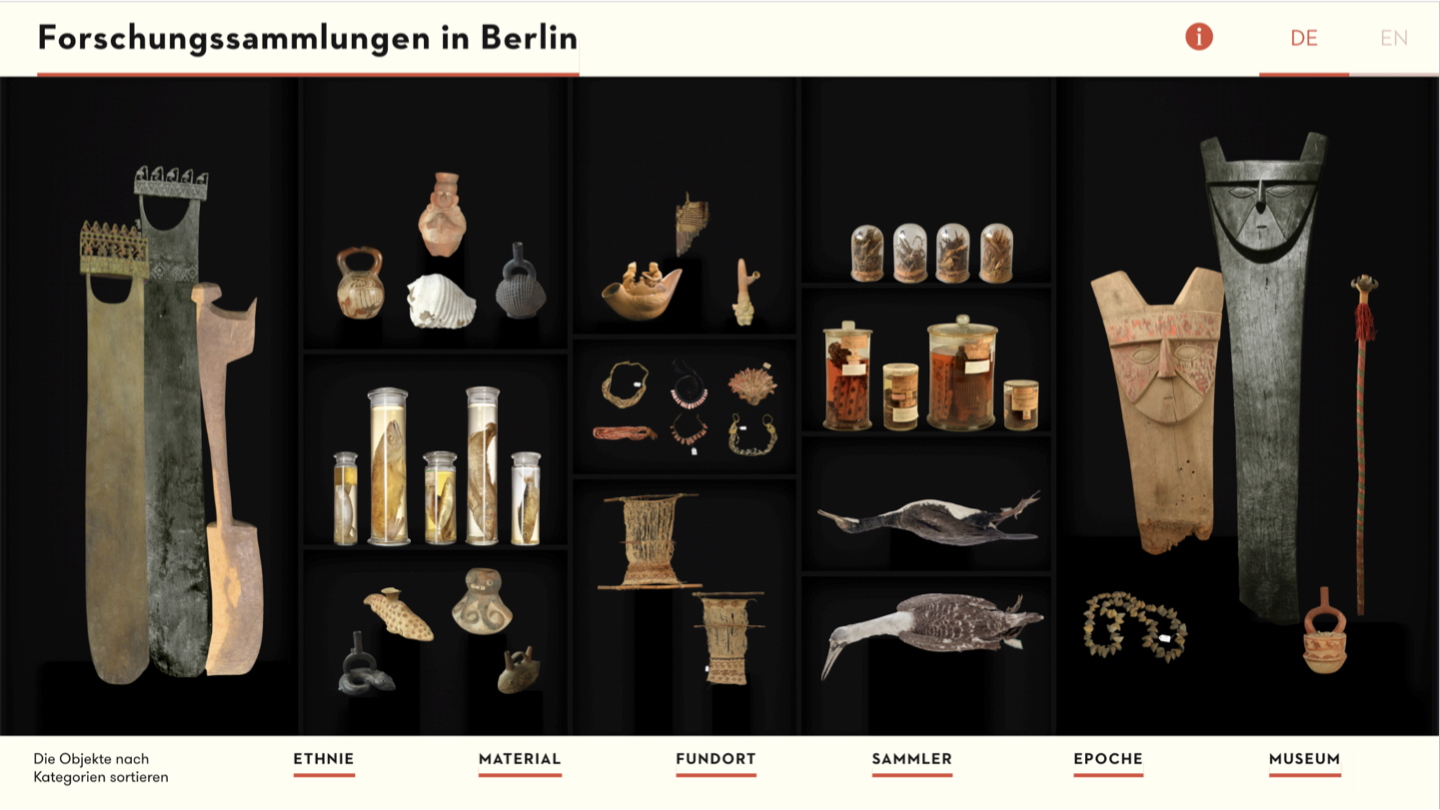
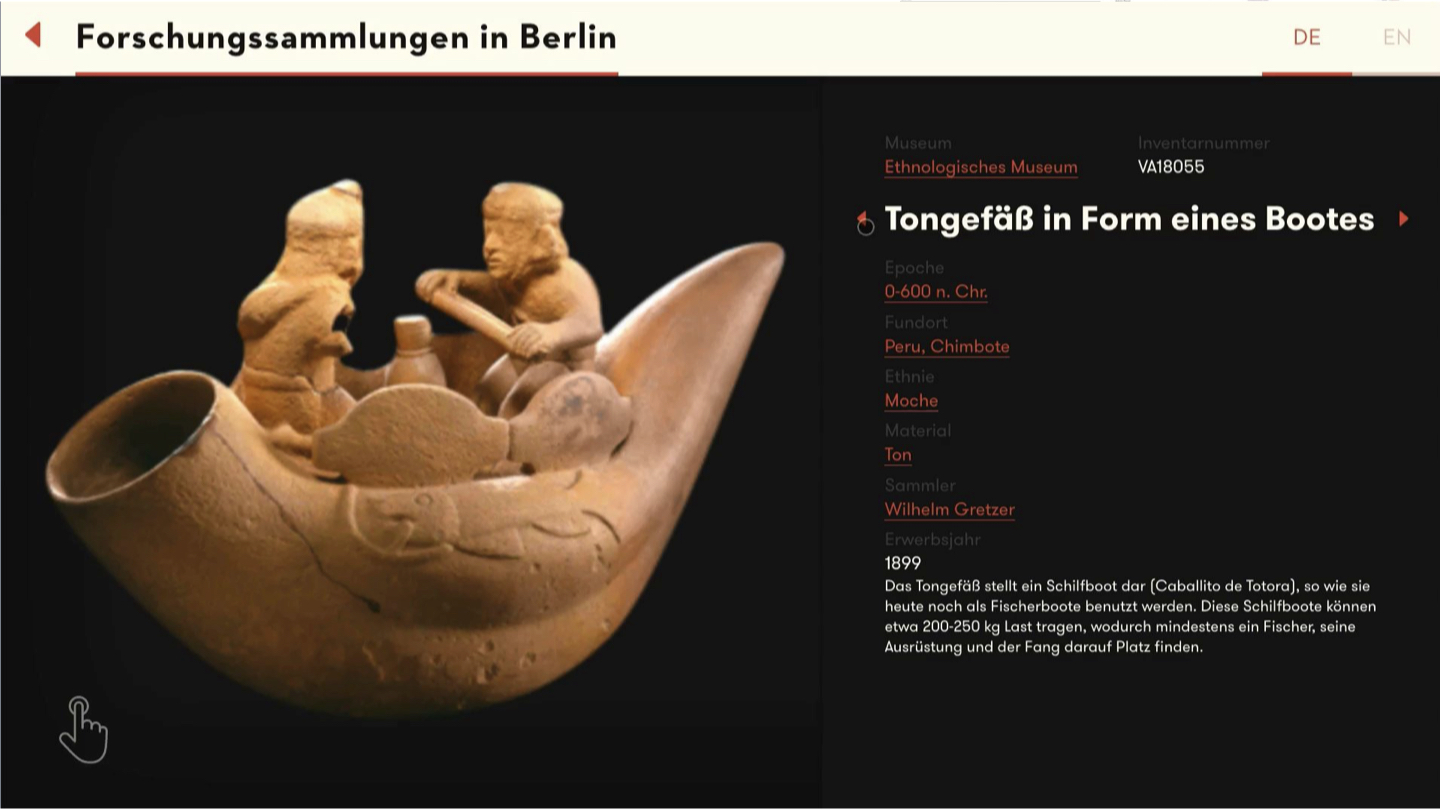
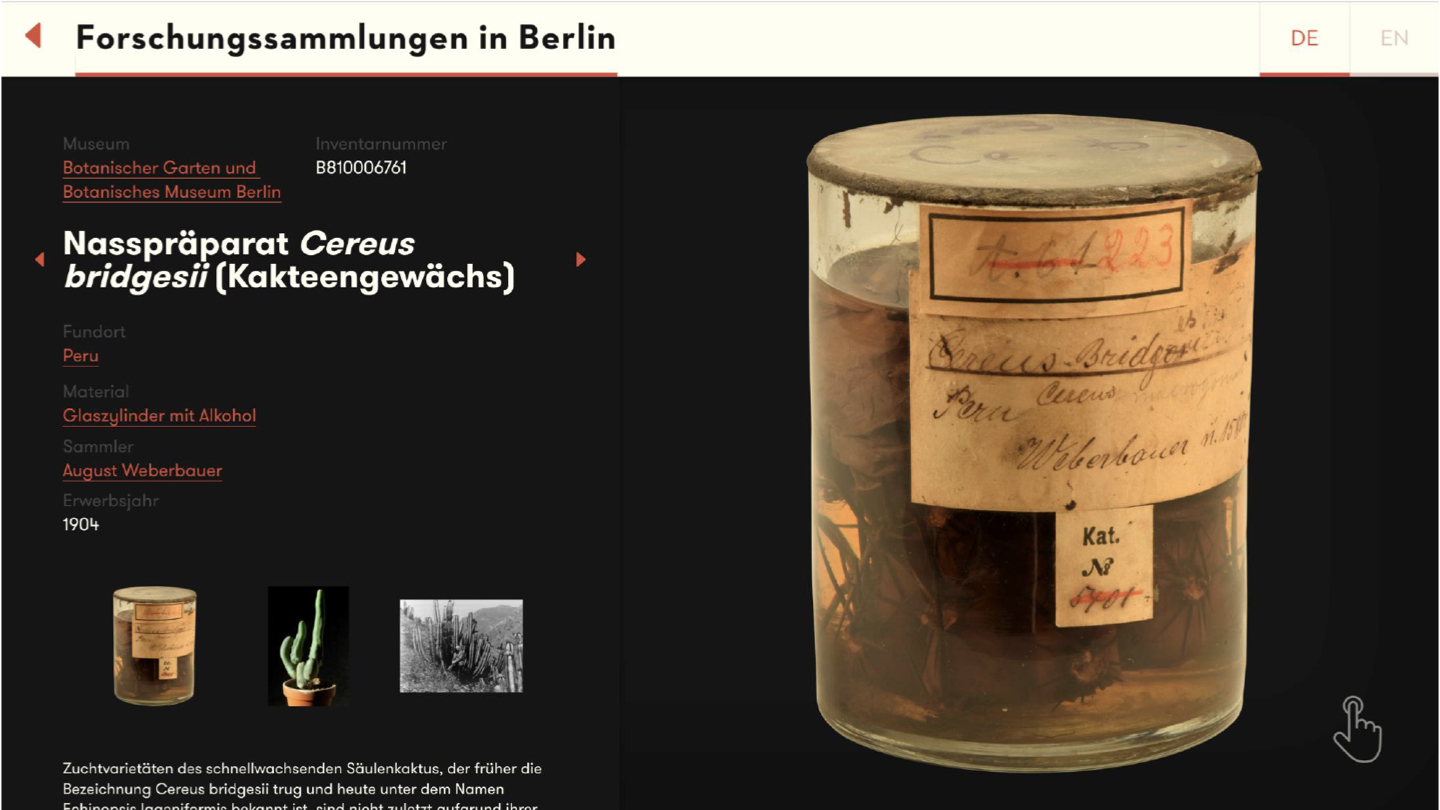
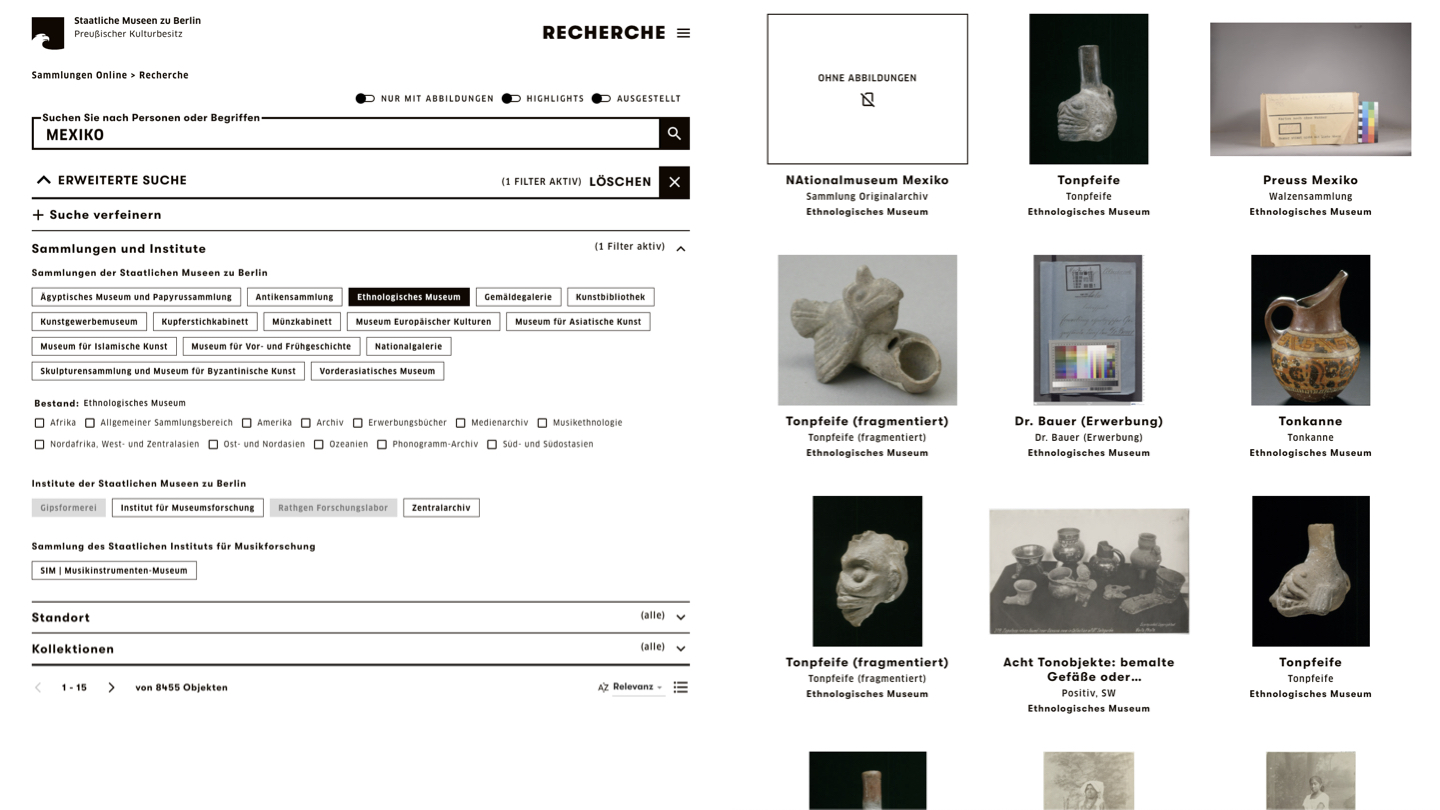
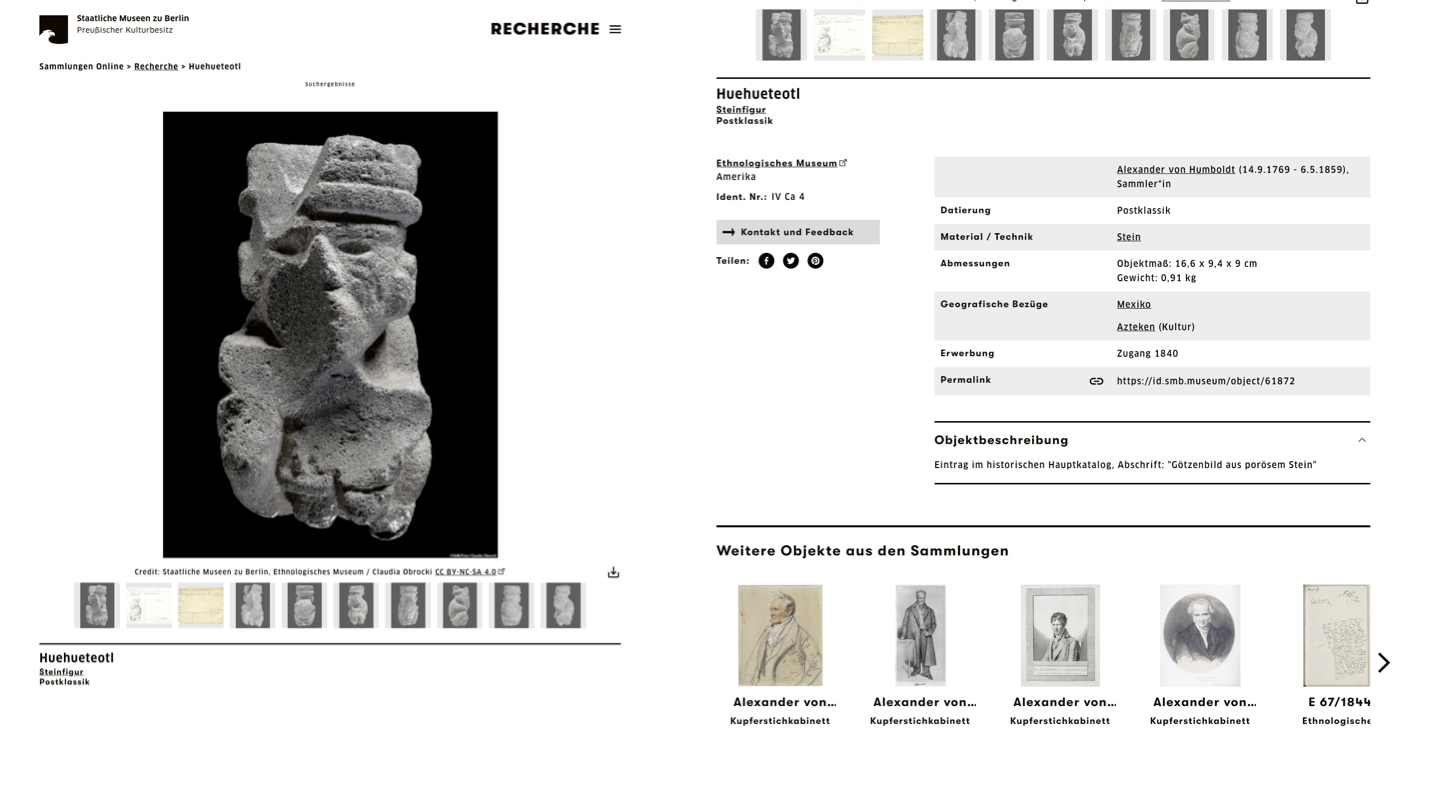
Now however, a platform for the online presentation of the collections exhibited in the Humboldt Forum has been produced and published. But how far did it go?
Did a decolonization occur in the process and does this come through in the presentation? These are questions for users to evaluate.
SLIDE 44
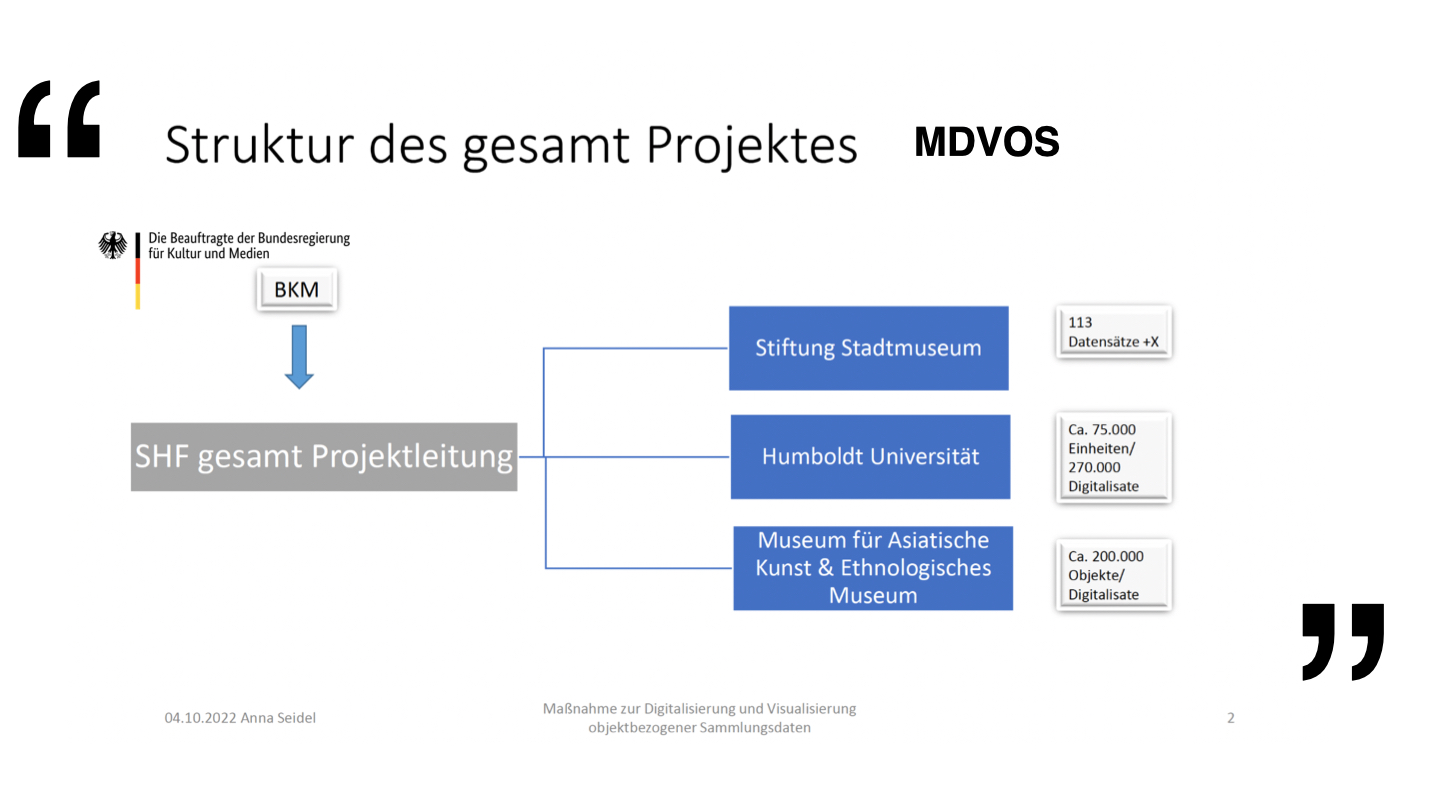
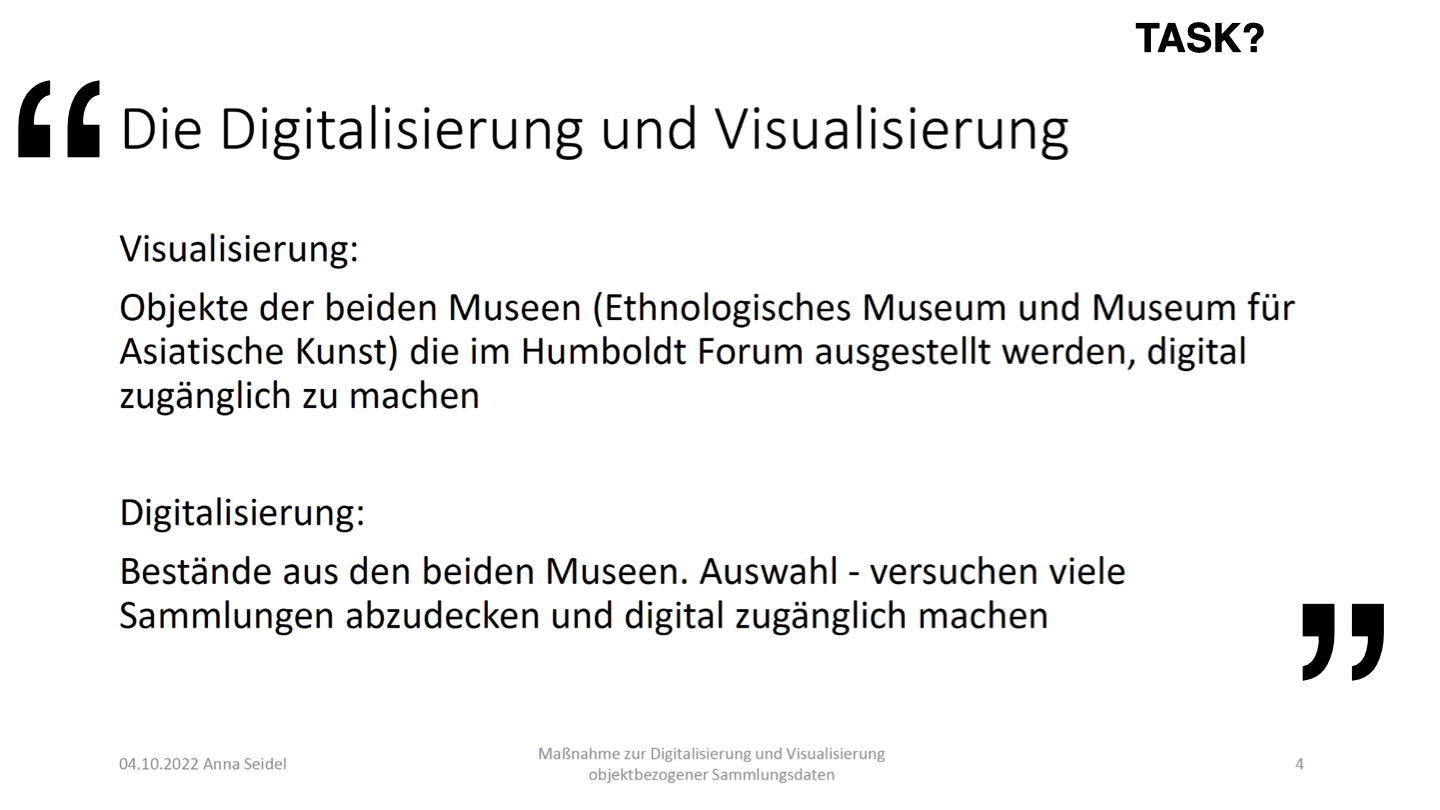
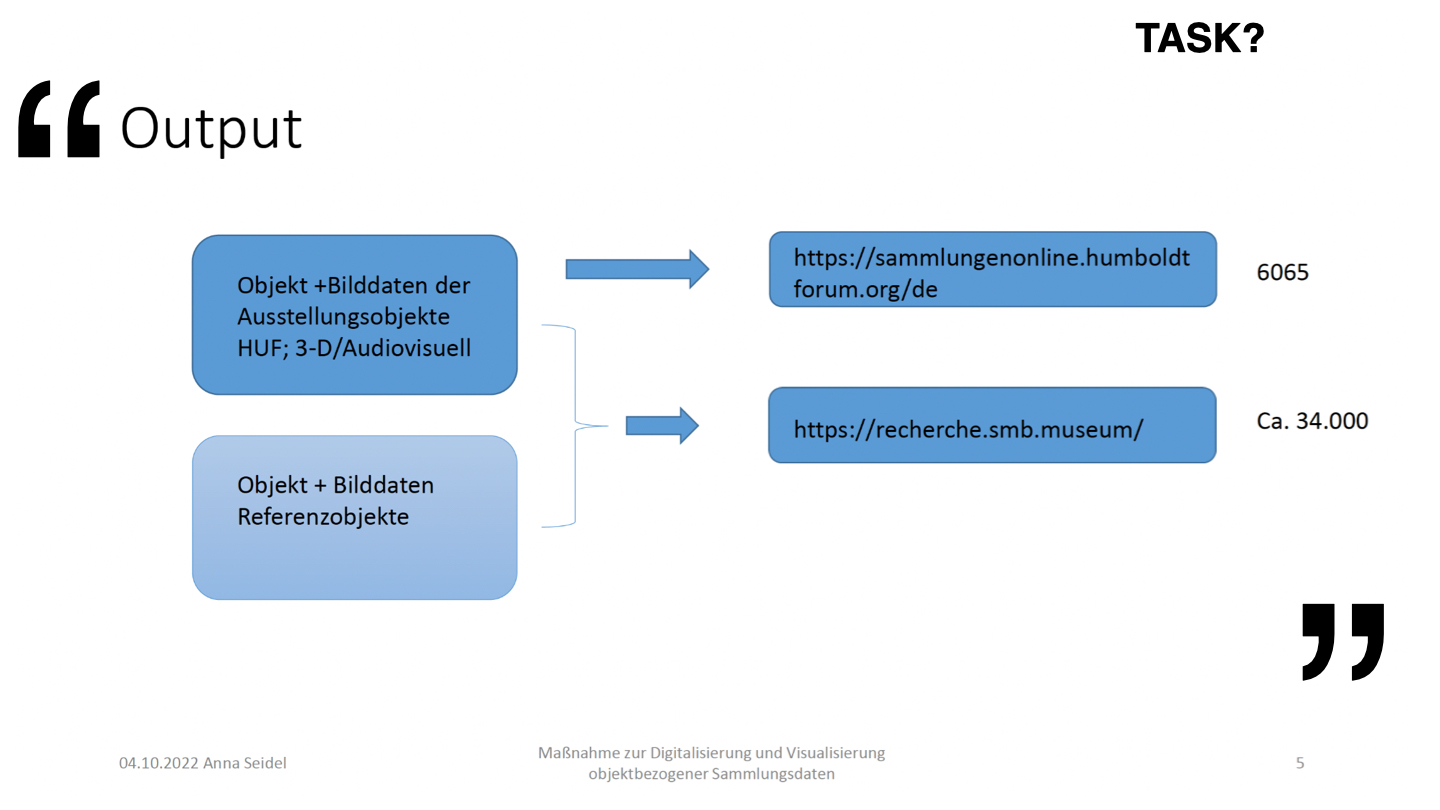
If we look at the tasking of this project, we see that the tasking focuses on « digitalization and visualization » in narrow terms and the strategic dimension of data-linking and enablement of semantic functions is not addressed.
SLIDE 45
Availability, « Zugänglichkeit » is the focus. And what the project achieved for some 300-some thousand objects. But what now?
SLIDE 46
I would claim there is surface her we can observe. Where the movement of presentation ends at this surface, its display in an online gallery, a reversal of value accrual streams is not yet in sight.
SLIDE 47
The opportunity lost or not yet lost to activate semantic network effects from digitalized collections data is the opportunity to overcome the atomization and stasis of data.
SLIDE 48
Linked Data practice can amplify and grow content by raising isolated details to the function of connecting threads for navigating and exploring meaning in large sets of curated (but fluid) content.
SLIDE 49
…
SLIDE 50
This we had achieved already in an early prototype presented in the Extreme! exhibition in 2017, where the data was presented from exploration out from the museum data into the worlds of information and towards the horizons of knowledge behind/beyond the objects
SLIDE 51
Objects and their isolated units of collection data become doors and paths to the cultures, time periods, places, materials, and collection stories that are ultimately the point.
SLIDE 52
Rather than first and foremost the identity-asserting and -affirming information of traditional cataloguing practices.
SLIDE53, 54, 55, 56
But the data is now there. The Ethnologisches Museum and the Museum für asiatische Kunst, on a content management system of their own, are building out their capacity to reflect and adapt data structures and their project towards the « Kollaboratives Museum » will certainly yield big advances.
SLIDE 57
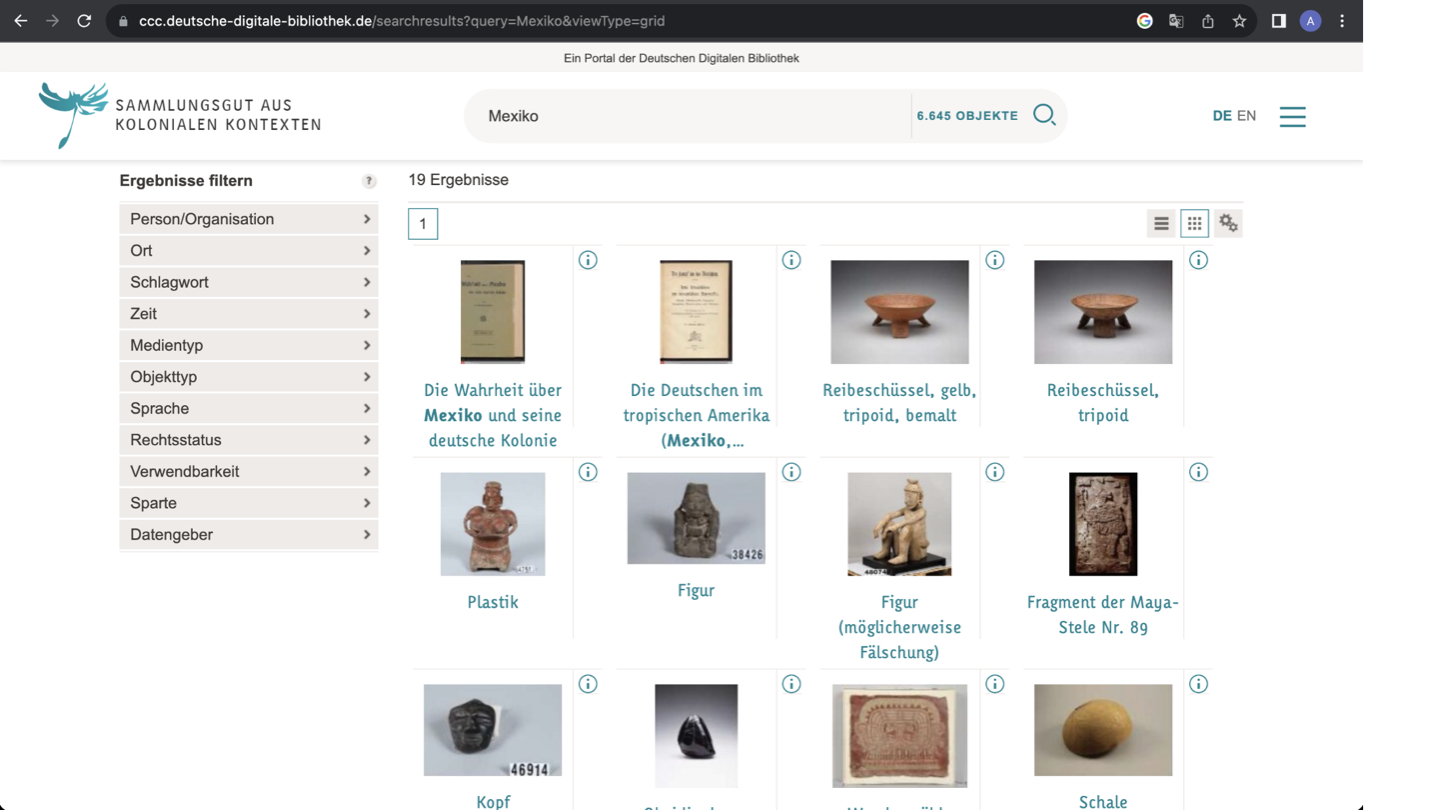
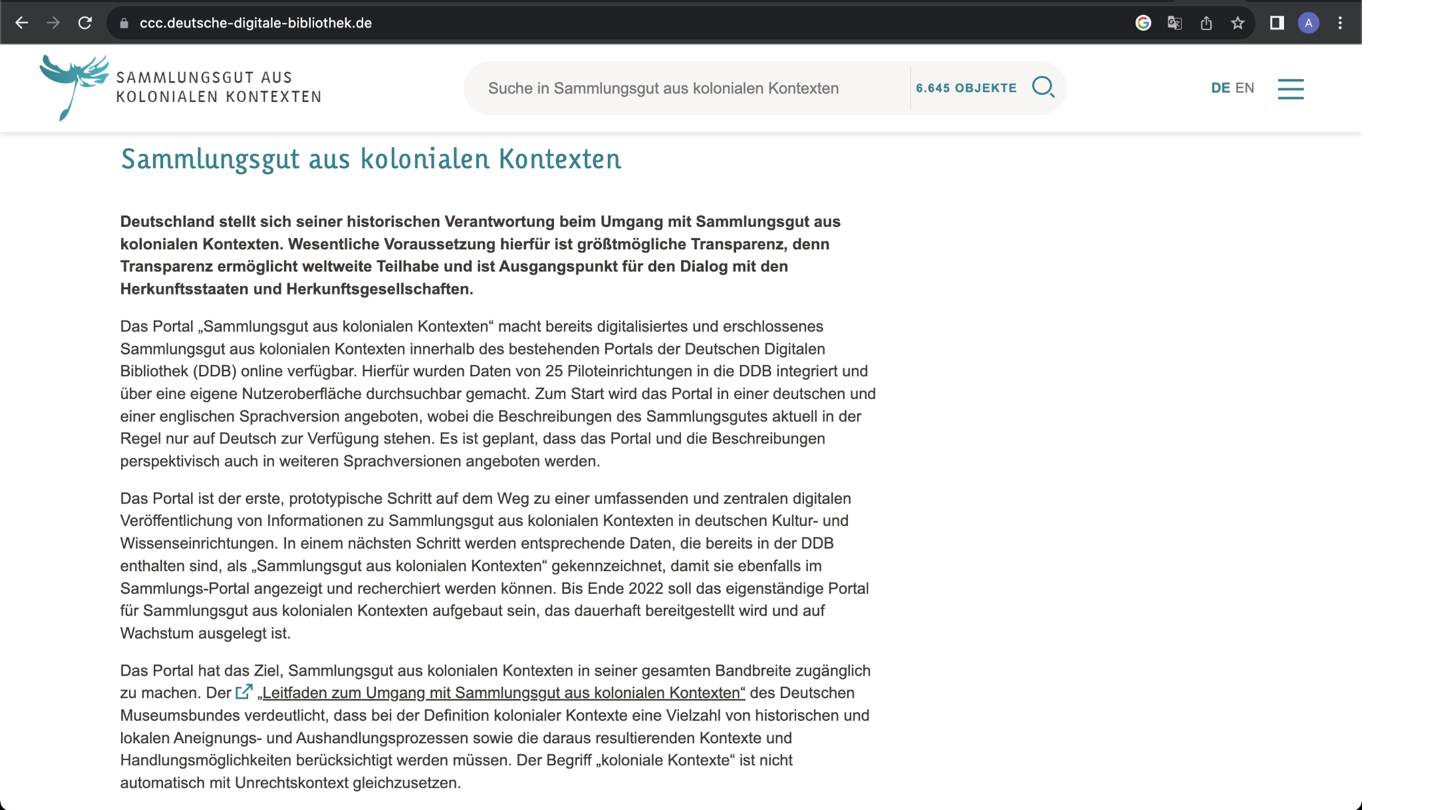
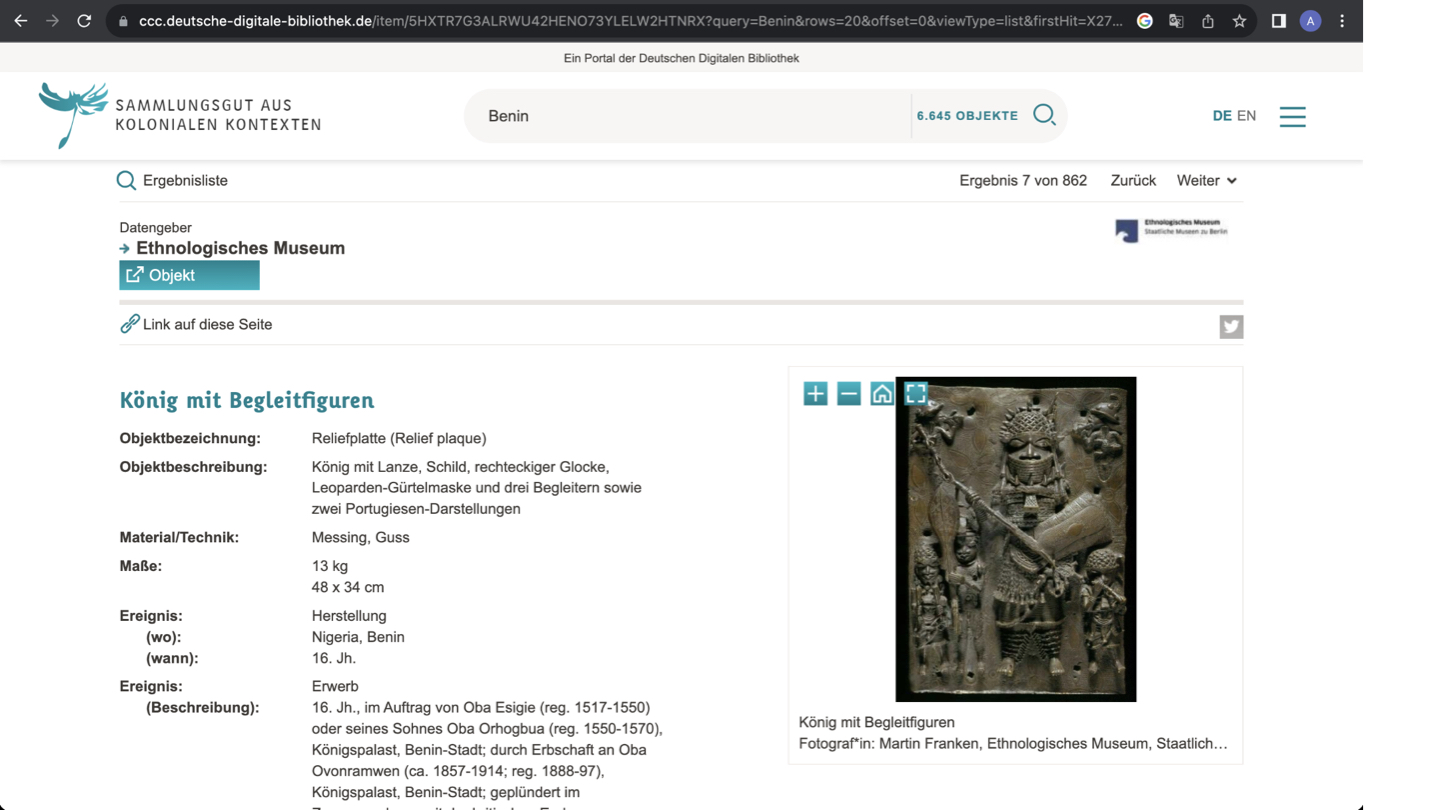
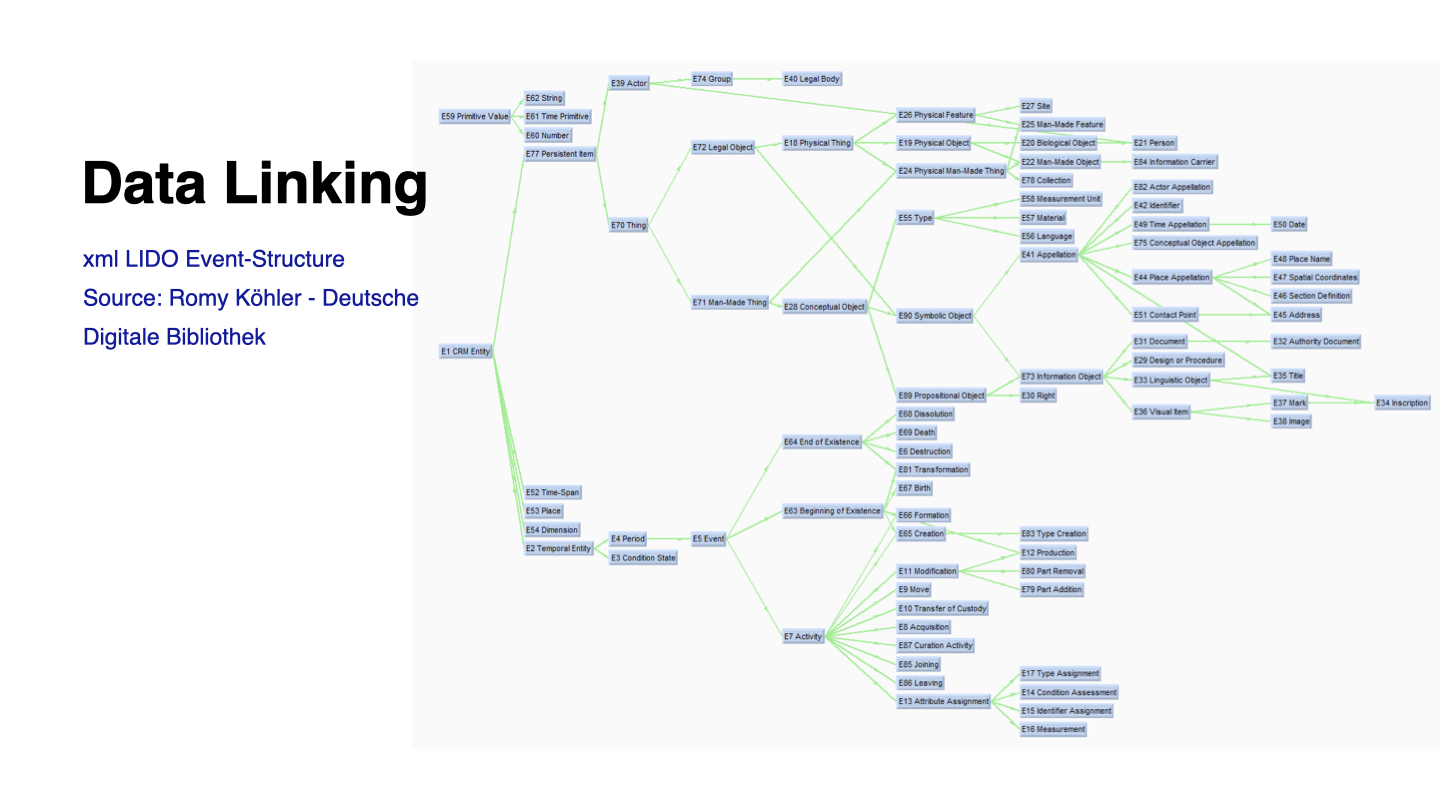
The sub-platform of the Deutsche Digitale Bibliothek, dedicated to aggregating collections data on collections from colonial contexts federally across Germany, has invested in linked data structuring for expressing detailed provenance chains on objects that have been sufficiently researched. This sets a new standard for the role linked data can play in digital collections displays with the complexities of colonial contexts and continuities as subject matter and medium at once.
SLIDE 61
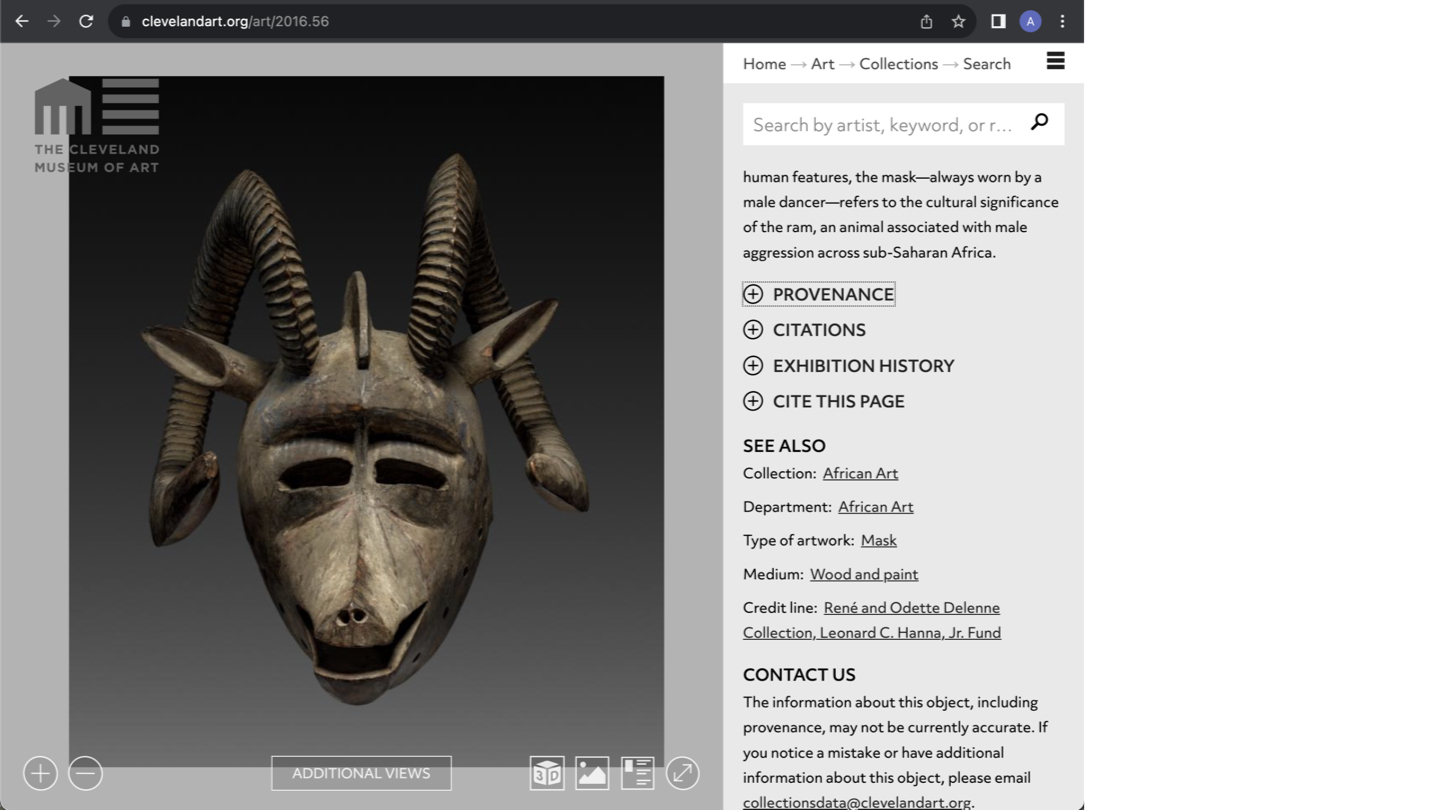
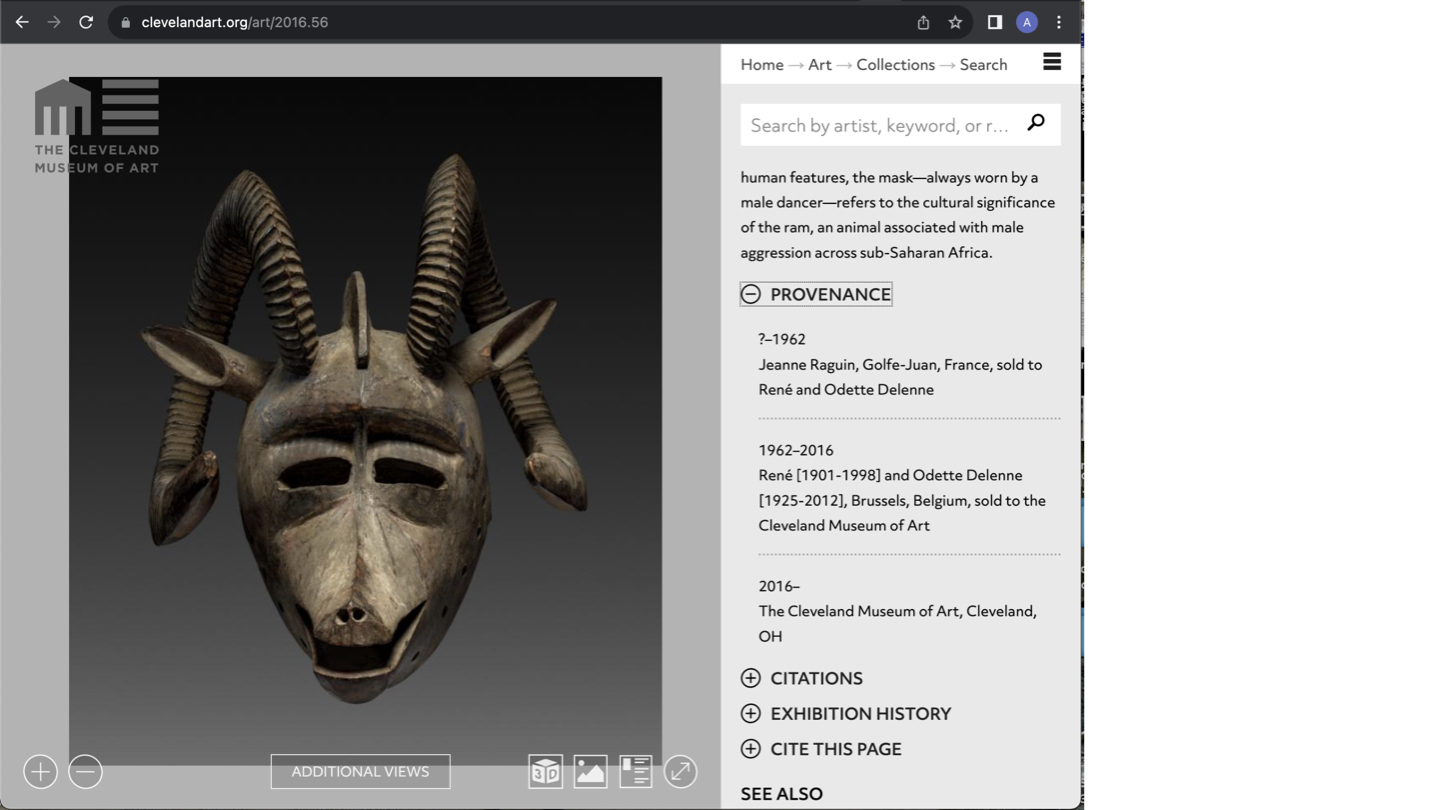
It also sets new standards and expectations for useability – just to add this example from the Cleveland Museum of Art, where linked object info is curated to offer thematic entrance and guidance through the collections
SLIDE 61
and Provenance displays not as a simple note but as a detailed chain enabling real availability and useability
SLIDE 64
We at TheGreenEyl think we can go further from this point, and are committed to exploring the possibilities in this unprecedented moment, where publicly accessible collections datasets enables a digital curating with museum contents never accessible before for cultural agents outside the museum. In our initiative since January of this year, Data Futures.
SLIDE 64
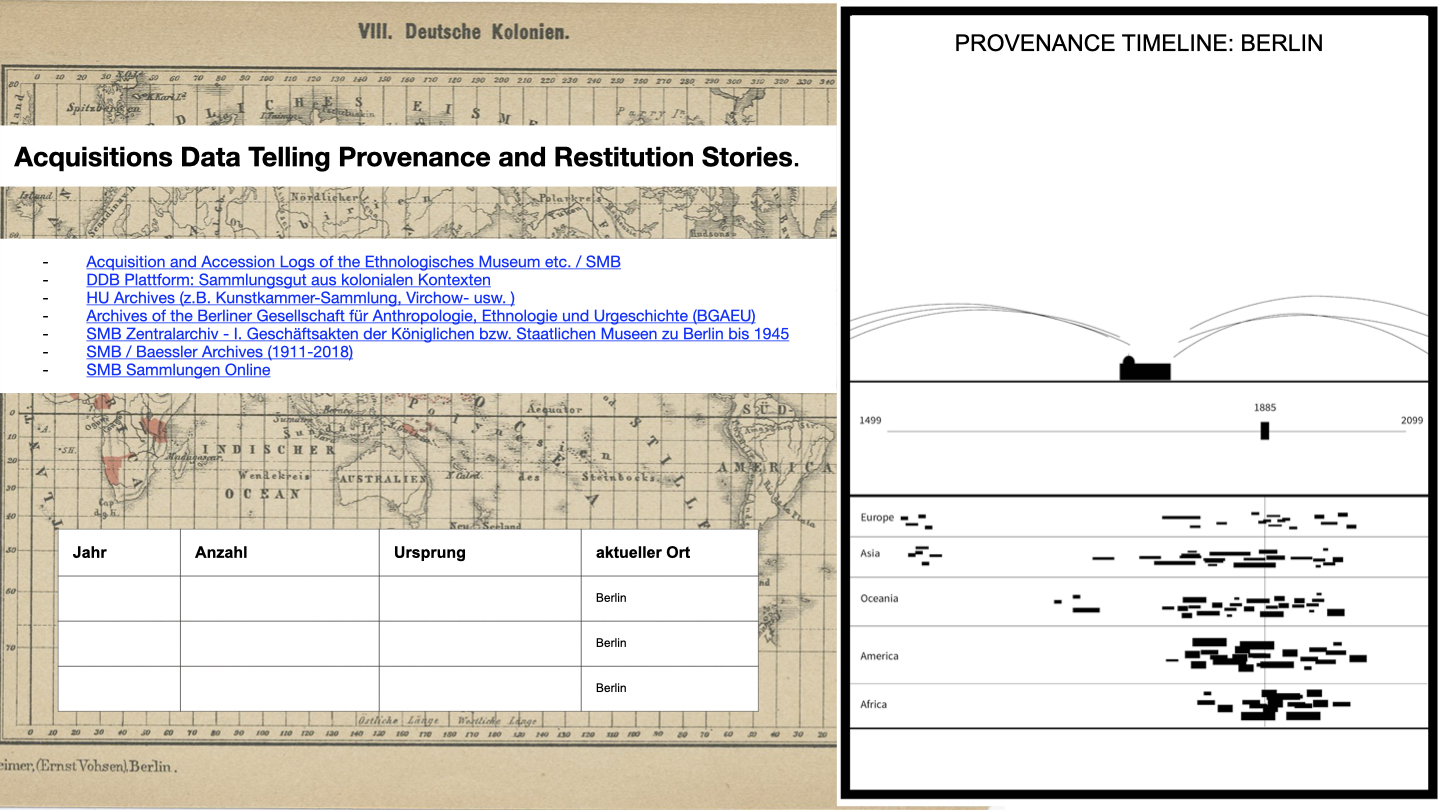
For example we see a way to draw on a simple set of acquisition data points to drive a powerful interactive visualization telling a big story of Berlin’s collections history, …
SLIDE 65
yielding unprecedented overvier – like here for acquisitions from South America since Alexander von Humboldt’s visit in 1804 –
SLIDE 66
here with a screen shot rough from our lab table this morning
SLIDE 67
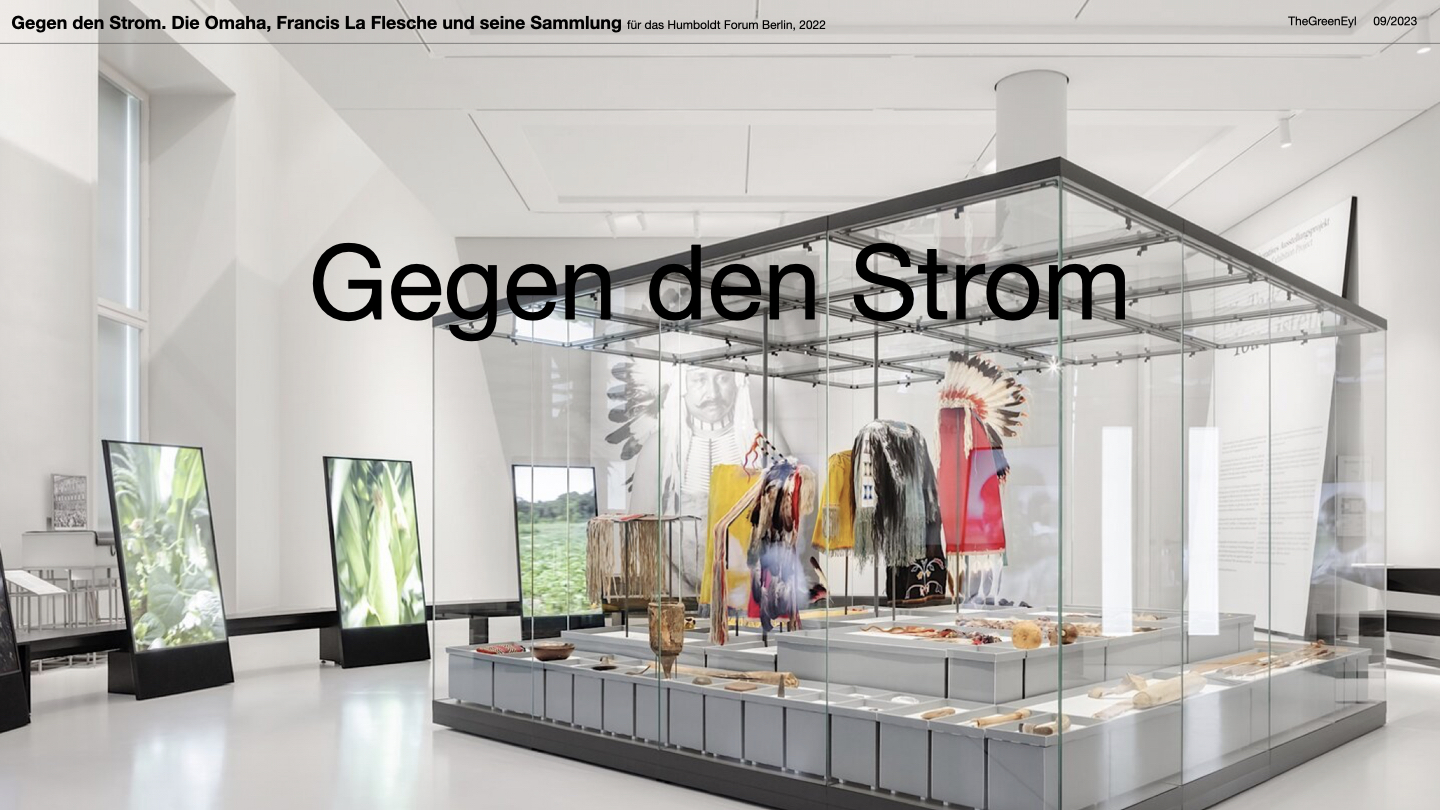
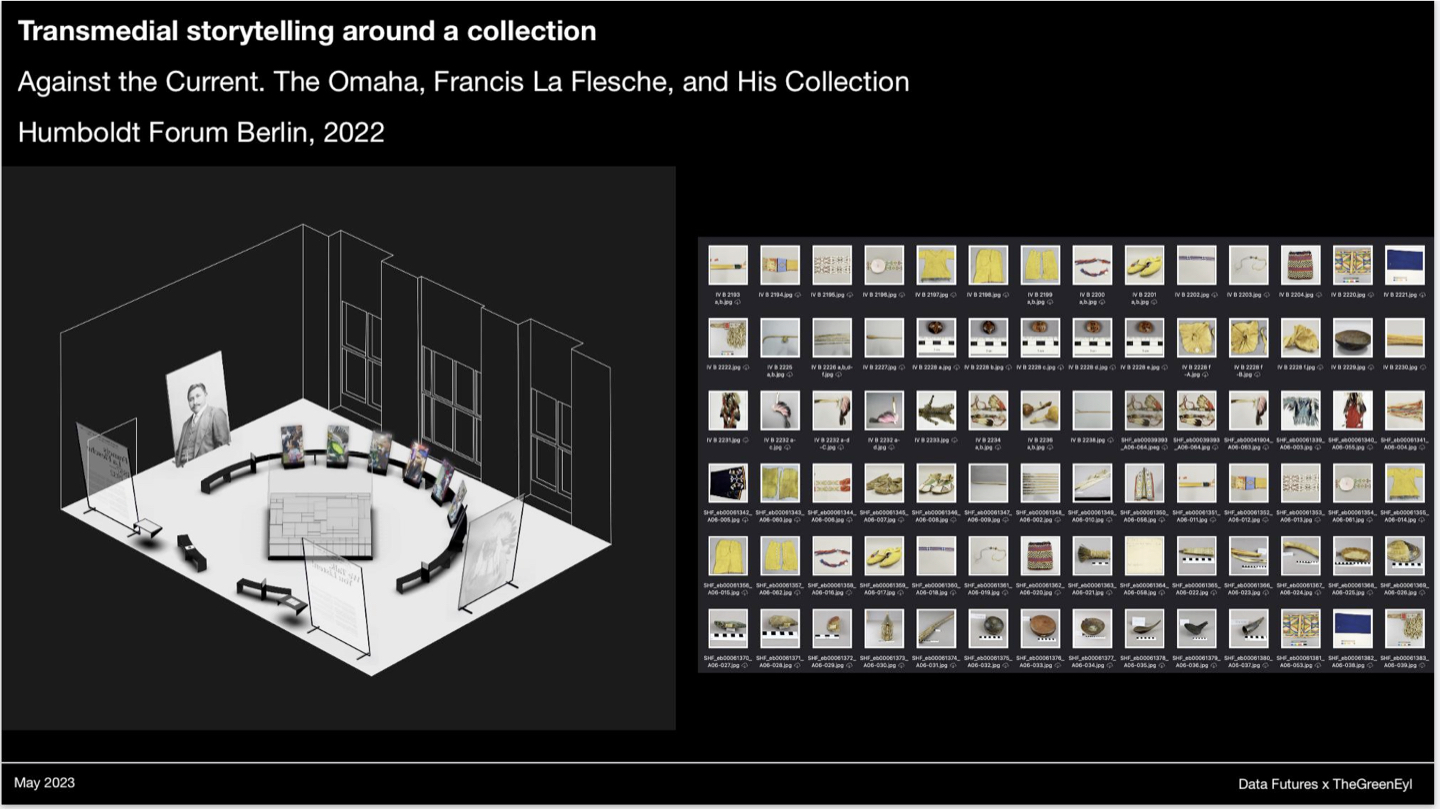
we are also dedicated to exploring continuities for already post- and anti-colonial collections displays and practices, like the LaFleche collection of the O’maha people, which TheGreenEyl designed for exhibition in temporary exhibition in the Humboldt Forum, and for which we see excited futures in digital forms evolved from the same spirit.
SLIDE 68
These are a few ideas – I hope to exchange more when he have time for questions and discussion.
THANK YOU







 Alan Prohm